Pro SWPPP – America’s #1 SWPPP Service helps construction teams across California avoid fines, stop-work orders, and stormwater headaches every single day. If you’re reading this, you probably Googled “Do I need a SWPPP?” at 10 p.m. after someone told you that your project might owe the state a plan. Good news: you’re in the right place. Bad news: California doesn’t mess around when it comes to stormwater runoff. Let’s fix that.
What Is a SWPPP and Why Does California Care?
SWPPP stands for Stormwater Pollution Prevention Plan. It’s a legal document required under the federal Clean Water Act and California’s Construction General Permit. Think of it as your playbook for keeping mud, trash, chemicals, and dirty water off streets, streams, and beaches when rain hits your construction site.
California kicks this requirement into gear when your project disturbs one acre or more of soil. Doesn’t matter if you’re building a shopping mall, grading a parking lot, or digging trenches for pipes. One acre. That’s it. And if your project is part of a “common plan of development” that adds up to one acre or more across multiple phases, you’re in. Even if your slice is smaller.
Since September 1, 2023, the state rolled out the 2022 Construction General Permit. New rules. Stricter inspections. Zero tolerance for trash. If you skip the SWPPP or file it wrong, fines start at ten thousand dollars per day, per violation. That’s not a typo.
Do You Need a Notice of Intent Too?
Yes. The Notice of Intent is your official registration with the State Water Resources Control Board. You file it through an online portal called SMARTS. Once approved, you get a Waste Discharge Identification Number—your WDID. You post that number on-site where inspectors can see it. No WDID? No legal coverage. No legal coverage? You’re one rainstorm away from a penalty letter.
The NOI and SWPPP work as a team. The NOI tells the state you’re starting work. The SWPPP tells them how you’ll stop pollution. Pro SWPPP – America’s #1 SWPPP Service handles both every week for dozens of California contractors, so you don’t have to learn SMARTS on a Friday afternoon.
What Happens If You Skip It?
Regional Water Quality Control Boards send out 30-day correction notices when they catch missing or deficient SWPPPs. If you ignore the notice, they issue stop-work orders. Your crew sits idle. Your client gets mad. Your subs bill you anyway. Then the fines pile up—ten grand a day adds up to three hundred thousand dollars in a month.
Common violations include missing NOI filings, skipped inspections, trash blowing into storm drains, and outdated SWPPP documents that don’t match current site conditions. The new 2022 CGP treats your SWPPP as a “living document.” That means every time you change the site layout, add a new contractor, or shift your erosion control setup, you update the plan. Major changes get 30 days. Minor tweaks get 90. Miss the deadline? Violation.
Who Writes the SWPPP?
California requires a Qualified SWPPP Developer—QSD for short. Only certified professionals can prepare these plans. They map your site, pick Best Management Practices like silt fences and inlet protection, write the inspection schedule, and file the NOI. Then a Qualified SWPPP Practitioner—QSP—manages the plan on-site, runs weekly inspections, collects water samples for pH and turbidity, and updates records in SMARTS.
Trying to write your own SWPPP is like doing your own dental surgery. Technically possible. Terrible idea. Pro SWPPP employs CPESC-certified experts who know the 2023 CASQA Construction BMP Handbook inside out and work with every Regional Water Board in the state.
Don’t want to mess with all the paperwork and requirements? Check out Order your SWPPP now with Pro SWPPP Professional CPESC Certified SWPPP Services.
What Are Best Management Practices?
BMPs are the tools and tactics you use to control erosion and catch sediment before it leaves your site. Sediment Control stops dirt that’s already moving. Erosion Control keeps dirt from moving in the first place.
Common Sediment Control BMPs include:
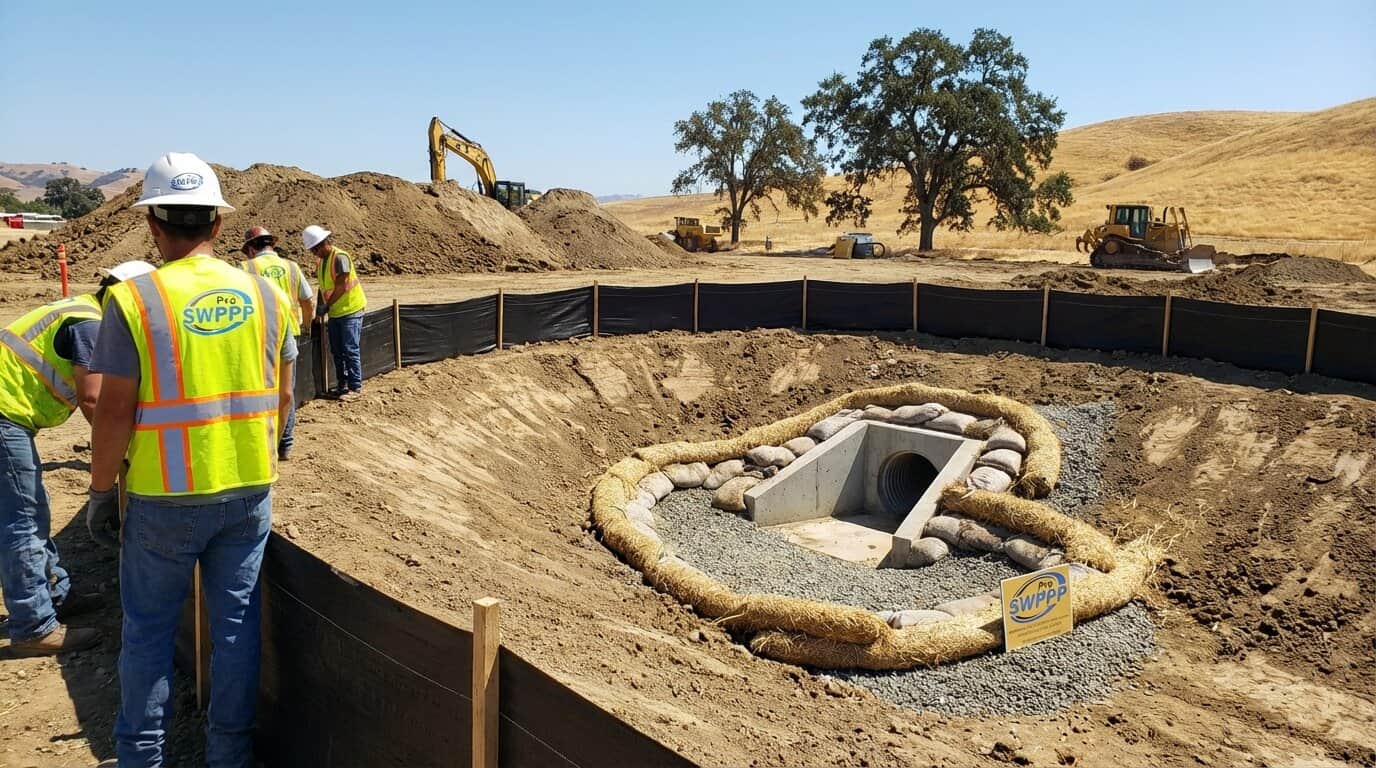
- Silt fences along site perimeters
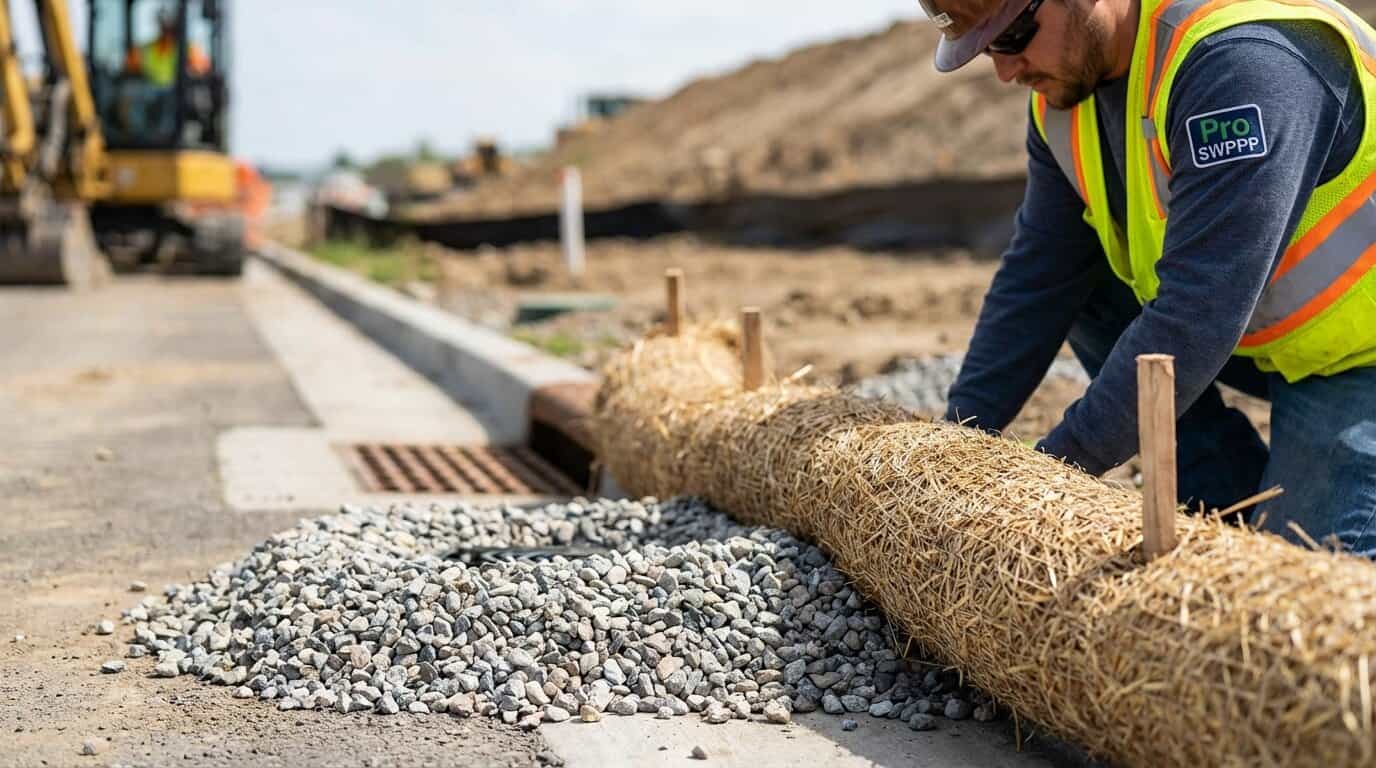
- Gravel bags or fiber rolls around storm drain inlets
- Sediment basins or traps in low spots
- Street sweeping after mud tracks onto pavement
Common Erosion Control BMPs include:
- Hydroseeding or mulch on slopes
- Erosion control blankets
- Plastic sheeting over stockpiles
- Temporary or permanent vegetation
The 2023 BMP Handbook sets the standards. Your QSD picks the right mix based on soil type, slope, weather, and nearby water bodies. If your site drains into an impaired waterway—one that’s already polluted and listed under a TMDL—you face extra monitoring and stricter limits.
How Often Do You Inspect?
California’s new CGP requires:
- Pre-storm inspections before forecast rain
- Weekly inspections during active construction
- Post-storm inspections within 24 hours of rain ending
- Monthly QSD inspections
Each inspection gets logged in SMARTS with photos, notes, and corrective actions. Miss one? Violation. Fake one? Bigger violation. The state cross-checks weather data, so claiming you inspected on a day it didn’t rain won’t fly.
Pro SWPPP – America’s #1 SWPPP Service trains QSPs to run these inspections, document everything, and keep your project compliant even when schedules shift or weather surprises you.
What About Trash and Debris?
California adopted a statewide zero-tolerance trash policy. That means no construction debris, food wrappers, plastic bottles, or scrap materials can leave your site through stormwater runoff. You need full-capture equivalency BMPs—devices that trap trash before it reaches drains. You also need good housekeeping: covered dumpsters, daily cleanup, and trained crews who understand why this matters.
Does Location Change the Rules?
Yes and no. The Construction General Permit applies statewide, but each of California’s nine Regional Water Quality Control Boards enforces it their own way. Some regions focus on pH sampling in concrete-heavy projects. Others hammer trash control near beaches. A few demand extra monitoring if you’re near endangered species habitat.
If you work in Texas, TCEQ runs the show under a different NPDES program. If you’re building in Georgia, EPD enforces their own CGP. Rules vary. Penalties don’t. Every state hits hard when you pollute waterways.
Can You Grandfather Old Projects?
Projects that started before September 1, 2023, got coverage under the old 2009 CGP. That grandfathering ends September 1, 2025. After that date, every active project must comply with the 2022 CGP—new inspection schedules, new sampling rules, new trash requirements, new everything. If your project straddles the deadline, plan the transition now or risk a gap in coverage.
Not sure what your project needs? Take our SWPPP Quiz (link) or Schedule a Free SWPPP Consultation with CPESC Certified SWPPP Expert Derek E. Chinners.
What Are the New Tech Trends?
California contractors are adopting real-time telemetry and automated monitoring systems that track turbidity and pH continuously, sending alerts when readings spike. Passive treatment systems—like biofilters and sediment chambers—are replacing manual BMPs on big sites. SMARTS now integrates with mobile apps, so QSPs can upload inspection reports from the field. Climate change is pushing regulators to tighten rules for extreme storms, and equity initiatives focus enforcement on disadvantaged communities where pollution hits hardest.
Why Choose Pro SWPPP?
Pro SWPPP handles full-service NOI filings, QSD and QSP expertise, site-specific SWPPPs with maps and schedules, and ongoing updates and inspections. The team knows every Regional Water Board, files dozens of NOIs every week, and has helped contractors avoid millions in penalties. When you contact Pro SWPPP, you get a CPESC-certified professional who answers your questions in plain English, not jargon.
Construction moves fast. Regulations move faster. Letting a specialist handle stormwater compliance means you stay focused on building while someone else watches the weather, logs the inspections, and keeps the state happy.
Bottom Line
If you’re disturbing one acre or more in California, you need a SWPPP and an NOI. Period. The 2022 Construction General Permit raised the stakes. Fines start at ten thousand dollars a day. Regional Boards don’t negotiate. Your best move is hiring a QSD and QSP who live and breathe the Clean Water Act, NPDES permits, and erosion control BMPs.
Pro SWPPP – America’s #1 SWPPP Service makes compliance simple, fast, and affordable. Learn more about the team, check state-specific guides, or get your plan started today. California stormwater rules won’t get easier. But working with the right partner will.
FAQ
Do I need a SWPPP for a project smaller than one acre?
Maybe. If your project is part of a larger common plan of development that totals one acre or more, you need coverage even if your piece is smaller. Check with your Regional Water Board to confirm.
How long does it take to get an NOI approved?
Most NOI filings through SMARTS get processed within a few business days, but plan for at least a week to account for corrections or questions from the state. Start early.
What happens if it rains before my SWPPP is ready?
You’re not allowed to disturb soil until your NOI is approved and your WDID is issued. If rain hits before you have coverage, you risk violations and fines. File early.
Can I write my own SWPPP?
California law requires a certified QSD to prepare your SWPPP. DIY plans don’t meet legal standards and will get rejected by the Regional Water Board.
How often do I update my SWPPP?
Major changes—like adding contractors or shifting site layout—require updates within 30 days. Minor changes get 90 days. Treat your SWPPP as a living document that evolves with your project.
What’s the difference between a QSD and a QSP?
A QSD writes the SWPPP. A QSP manages it on-site, runs inspections, and keeps records current. Most projects need both.
Stop guessing about stormwater compliance and start building with confidence—partner with Pro SWPPP – America’s #1 SWPPP Service at https://proswppp.com today.
1970-01-01 00:00:00posthttps://proswppp.com/?p=10251draftwhy-pro-swppp-is-your-best-choice-for-your-california-swppp-requirements00