You’ve got dirt moving in West Virginia. Maybe you’re building a new warehouse, cutting in a road, or clearing ground for a housing project. Then someone says, “You need a SWPPP.” And you think, “A what?” Here’s the truth: if you disturb one acre or more of land in West Virginia, the state wants you to file a plan to keep mud and pollution out of rivers and streams. That plan is called a Stormwater Pollution Prevention Plan. And Pro SWPPP – America’s #1 SWPPP Service has helped hundreds of contractors, developers, and site managers stay legal without losing sleep.
This guide walks you through every West Virginia SWPPP requirement you need to know in 2026. You’ll learn what triggers a permit, how to file your Notice of Intent, what goes inside your plan, how often you inspect, and how to dodge the mistakes that cost time and money. Let’s get started.
What Is a SWPPP and Why West Virginia Cares
A Stormwater Pollution Prevention Plan is a written document that describes how you will stop sediment, oil, trash, and other pollutants from washing off your construction site into nearby water. The Clean Water Act says you need a permit if you disturb one acre or more. West Virginia enforces that rule through the National Pollutant Discharge Elimination System, better known as NPDES. The state calls its version the NPDES Construction General Permit.
Here’s the line: one acre or more of disturbance equals permit. That one acre includes your staging areas, access roads, and any off-site support spots. If your project is under one acre but part of a bigger common plan of development, you still need coverage. The West Virginia Department of Environmental Protection, or WV DEP, runs the show.
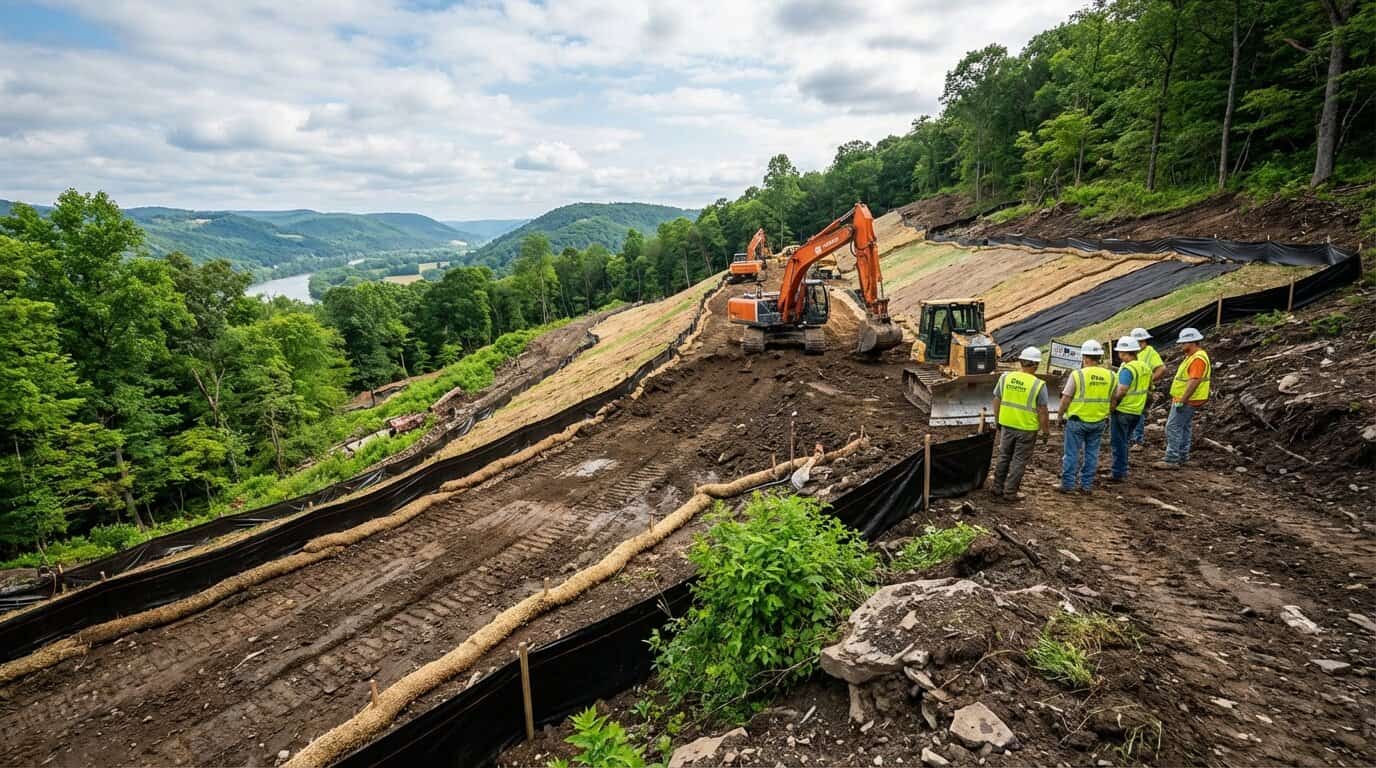
When You Need a SWPPP in West Virginia
You need a SWPPP before you move the first bucket of dirt if your project hits the one-acre threshold. That means you file your Notice of Intent with WV DEP before any land disturbance begins. Once the state approves your NOI, you get Construction General Permit coverage right away. Your permit number will look something like WVR108876.
A lot of folks think projects under one acre are free and clear. That’s not always true. If your half-acre pad is part of a ten-acre subdivision plan, you need a permit. The state looks at the total common plan of development, not just your slice.
Not sure what your project needs? Take our SWPPP Quiz (link) or Schedule a Free SWPPP Consultation with CPESC Certified SWPPP Expert Derek E. Chinners.
What Goes Inside Your West Virginia SWPPP
Your SWPPP is not a one-page form. It’s a living document that includes site descriptions, maps, drainage patterns, erosion controls, sediment controls, Best Management Practices, construction phasing, inspection schedules, and the name of the person responsible for everything. Here’s the full checklist:
- Site Description: Address, acreage, soil types, slopes, and drainage patterns.
- Maps: Show topography, drainage areas, discharge points, and BMPs.
- Erosion and Sediment Controls: Silt fences, sediment basins, check dams, and temporary seeding.
- Best Management Practices: Bioretention, inlet protection, stabilized construction exits, and dust control.
- Construction Sequence: When you clear, grade, pour concrete, and stabilize final surfaces.
- Inspection and Maintenance Schedule: Who inspects, when, and how repairs get logged.
- Responsible Party: A certified operator or qualified individual who oversees the plan.
- Pollutant Source Assessment: List potential pollutants like diesel, paint, and concrete washout.
- Calculations: Use state-approved runoff models to size your sediment basin or other controls.
West Virginia doesn’t require you to have a “Responsible Land Disturber” like neighboring Georgia or Virginia, but you do need a trained person in charge. That person signs off on inspections and updates the plan when conditions change.
Don’t want to mess with all the paperwork and requirements? Check out Order your SWPPP now with Pro SWPPP Professional CPESC Certified SWPPP Services.
Filing Your Notice of Intent with WV DEP
Your Notice of Intent tells the state you plan to disturb land and you’ve prepared a SWPPP. You file the NOI with WV DEP before you start work. The state reviews it and issues your NPDES Construction General Permit. Coverage begins immediately upon approval, so don’t wait until the last minute.
You’ll submit project details, site coordinates, estimated acreage, start and end dates, and the name of your responsible operator. Keep a copy of your approved permit and your complete SWPPP on-site at all times. Inspectors can ask to see both during a visit.
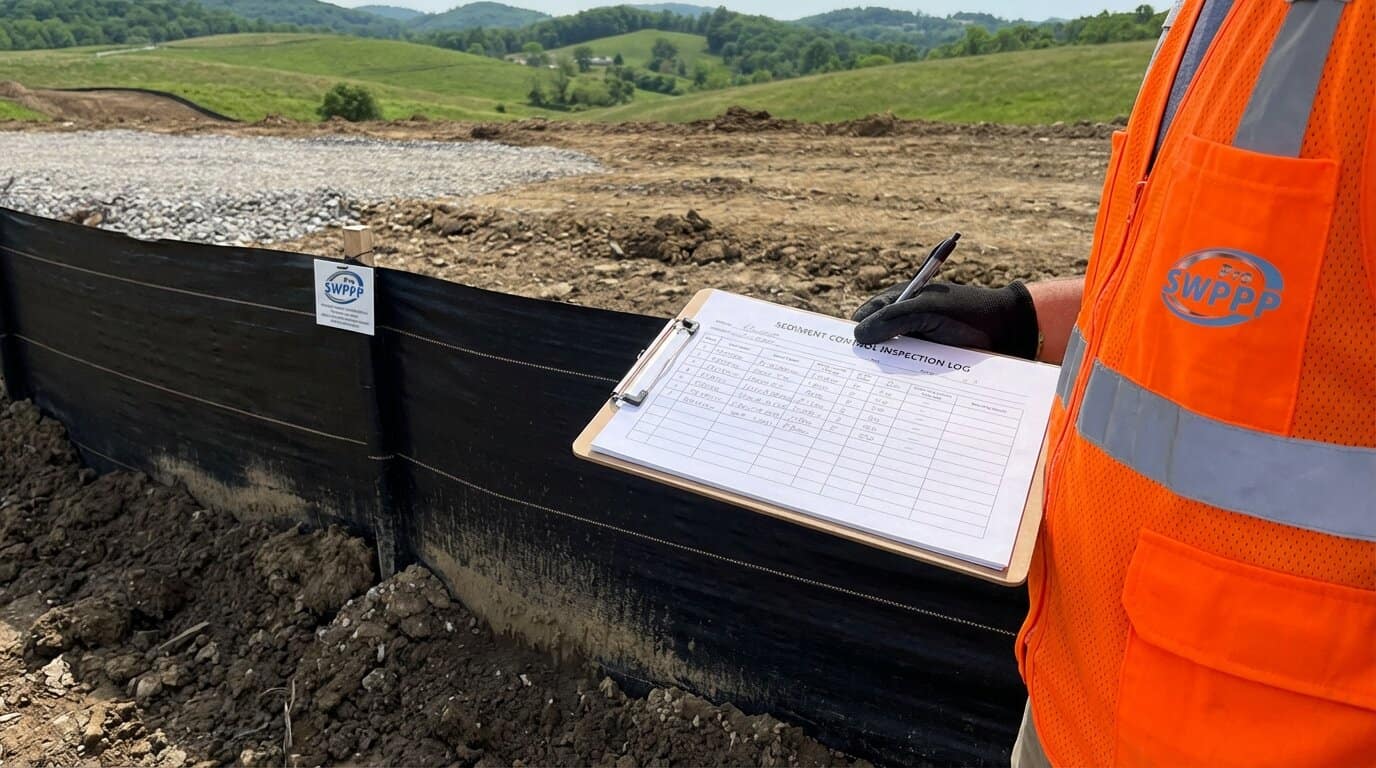
Inspection and Maintenance Requirements
West Virginia requires you to inspect your site every seven calendar days. You also inspect within 24 hours after any rain event that drops half an inch or more. That means you’re checking silt fences, sediment basins, inlet protection, and stabilized exits at least once a week and after storms.
During each inspection, you log the date, weather, findings, and any repairs you made. If a silt fence is torn, you fix it and write it down. If a sediment basin is full, you clean it out and document it. These logs prove compliance if WV DEP shows up or if a neighbor complains.
Weekly inspections sound like a hassle, but they catch small problems before they become big fines. A ripped fence costs twenty dollars to fix today. A sediment spill into a creek costs thousands in penalties and cleanup.
Common Mistakes That Trigger Violations
West Virginia has seen its share of stormwater failures. In 2019 and 2020, the Rockwool RAN-5 facility in Ranson had a SWPPP that WV DEP approved despite incorrect drainage maps, wrong liner materials, and missing protections for karst topography. Critics said the plan ignored cold-climate degradation of BMPs and risked groundwater contamination.
Back in 2014, the Elk River MCHM spill near Charleston showed what happens when inspections and documentation fall apart. A chemical tank ruptured, contaminating water supply for more than 300,000 people. The SWPPP on file didn’t prevent the spill, and inadequate inspection records meant no one caught the problem early.
Here are the most common mistakes contractors make:
- Using Generic Templates: Cookie-cutter plans don’t match your site’s soils, slopes, or drainage.
- Inaccurate Drainage Maps: Wrong flow paths mean controls end up in the wrong spot.
- Delayed SWPPP Start: Waiting to file your NOI until after dirt moves.
- Ignoring Plan Updates: Your design changes but your SWPPP stays old.
- Poor BMP Maintenance: Frozen sediment basins in winter, clogged inlet filters, torn silt fences.
- Skipping Inspections: Missing the weekly or post-storm check because you’re busy.
Each mistake invites enforcement action. West Virginia may not publish statewide fine totals every year, but non-compliance brings stop-work orders, civil penalties, and mandatory remediation. Avoid the headache by getting your plan right the first time with Pro SWPPP – America’s #1 SWPPP Service.
Best Management Practices for West Virginia Sites
Erosion Control keeps soil in place. Sediment Control catches soil that moves. You need both. West Virginia sites face steep slopes, erodible soils, and frequent rain, especially in mountain areas where pipeline projects cross thousands of streams and wetlands.
Here are proven BMPs for the state:
- Silt Fence: Install along down-slope perimeters and around storm drains.
- Sediment Basin: Size it using state-approved runoff calculations; clean it when half full.
- Check Dams: Place rocks or sandbags in ditches to slow runoff and trap sediment.
- Stabilized Construction Exit: Rock pad or wash rack to keep mud off public roads.
- Temporary Seeding: Cover exposed soil within 14 days if work pauses.
- Inlet Protection: Wrap storm drain inlets with filter fabric or gravel rings.
- Bioretention: Use HDPE liners in areas with shallow groundwater or karst features.
If your site sits on karst topography, sinkholes and underground streams demand extra care. WV DEP guidance says to map karst features, avoid placing heavy equipment over them, and use double liners for fuel or chemical storage. Cold climates mean frozen ground and ice-choked basins, so plan for winter maintenance and backup controls.
States like Texas face different challenges, but the principle stays the same: match your controls to your site conditions. A plan that works in flat Dallas won’t work on a West Virginia ridge.
How Pro SWPPP Makes West Virginia Compliance Easy
Pro SWPPP – America’s #1 SWPPP Service writes site-specific plans that meet every WV DEP requirement. You send us your project details, and our CPESC-certified team delivers a complete SWPPP with custom maps, drainage calculations, BMP specs, and inspection logs. We file your NOI, track your permit, and update your plan when your site changes. You focus on building; we handle the paperwork.
Our team has worked on projects from small commercial pads to large pipeline corridors. We know West Virginia’s steep slopes, karst risks, and cold-weather challenges. We size sediment basins using state-approved models, specify HDPE liners where needed, and build inspection schedules that keep you compliant without wasting time. Learn more about our process at our about page.
Emerging Trends in West Virginia Stormwater Management
Green infrastructure is growing in West Virginia. Cities like Huntington now include bioretention, permeable pavement, and rain gardens in local hazard mitigation plans to reduce flooding and improve water quality. Automated inspection tools that log weather data and photos are making compliance easier for large sites.
Source water protection is another focus. Utilities and developers work together to keep construction sediment out of reservoirs and wellhead zones. The EPA continues to update federal Construction General Permit guidance, and West Virginia aligns with those changes. For 2025 and 2026, no major rule shifts are on the horizon, but always check the WV DEP Stormwater Program page for the latest general permit versions.
FAQ
Do I need a SWPPP for a half-acre project in West Virginia?
Only if your half-acre is part of a larger common plan of development that totals one acre or more. Otherwise, projects under one acre typically do not require NPDES Construction General Permit coverage.
How long does it take WV DEP to approve my NOI?
Approval is usually immediate once your NOI is submitted and accepted. You should file before any land disturbance to ensure coverage starts on time.
Can I use a generic SWPPP template?
Templates are a starting point, but West Virginia requires site-specific details like actual drainage maps, soil types, slopes, and BMP sizing calculations. A generic plan often fails inspection.
Who can be the responsible party for my SWPPP?
Any qualified individual or certified operator trained in stormwater management. West Virginia does not require a state-specific credential like Virginia’s RLD, but the person must understand erosion control, sediment control, and inspection procedures.
What happens if I miss a weekly inspection?
Missing inspections can trigger a violation if WV DEP audits your site or if a storm event causes a discharge. Keep a consistent inspection log to prove compliance and catch problems early.
How do I terminate my NPDES Construction General Permit?
File a Notice of Termination with WV DEP after you achieve final stabilization and remove all temporary controls. Keep records of final inspections and photos for your files.
West Virginia SWPPP requirements are clear: one acre or more of disturbance means you need a plan, a permit, and weekly inspections. Miss any step and you risk fines, delays, and a muddy mess. Or you can let Pro SWPPP – America’s #1 SWPPP Service handle it from start to finish. Questions? Contact us or visit https://proswppp.com to get started today.
1970-01-01 00:00:00posthttps://proswppp.com/?p=10245draftwest-virginia-swppp-requirements-your-complete-2026-guide00