Pro SWPPP – America’s #1 SWPPP Service knows that right now, thousands of builders and site owners in Virginia are losing sleep over one question: do I need a SWPPP, an NOI, or both? The answer can mean the difference between breaking ground on time or getting hit with fines that can reach $25,000 per day. If you’re disturbing one acre or more of land in Virginia, the Clean Water Act doesn’t care about your budget or your timeline. It only cares that you follow the rules. This guide will show you exactly what Virginia SWPPP requirements look like in 2026, who needs what, and how to stay compliant without the headache.
What Is a SWPPP and Why Does Virginia Care?
A Stormwater Pollution Prevention Plan, or SWPPP, is your site-specific rulebook for keeping dirt, chemicals, and trash out of nearby streams, rivers, and lakes. Under the federal Clean Water Act and the NPDES permit program, any construction site that disturbs one or more acres must have a SWPPP before the first shovel hits the ground. Virginia enforces these rules through the Virginia Department of Environmental Quality, and they do not mess around.
Your SWPPP must identify every potential pollution source on your site, list the Best Management Practices you’ll use to stop pollution, and explain how you’ll inspect, document, and fix problems. Think of it as your site’s playbook for rain events. When a storm rolls through, your erosion control and sediment control measures need to be ready, or you risk contaminated runoff flowing into public waters.
Pro SWPPP – America’s #1 SWPPP Service has prepared hundreds of Virginia SWPPPs, and the number one mistake we see is thinking a generic template will fly. It won’t. Your SWPPP must match your site’s soil, slope, drainage, and activities, or inspectors will send you back to the drawing board.
Do You Need an NOI in Virginia?
An NOI, or Notice of Intent, is the form you file to get covered under Virginia’s General Permit for Discharges of Stormwater from Construction Activities. If you’re disturbing one acre or more, you must submit an NOI before you start work. The NOI tells the state who you are, where your site is, and that you have a SWPPP ready to go.
Here’s the kicker: you can’t legally break ground until your NOI is approved and you receive your permit coverage letter. Some contractors assume they can start work while the paperwork is pending. That’s a fast track to a violation notice and a stop-work order. The NOI and the SWPPP go hand in hand. You need both, and you need them filed correctly.
Virginia’s Construction General Permit requires electronic submission through the state’s online portal. You’ll also need to post your permit number on-site where inspectors can see it. Missing this step is like hanging a “cite me” sign on your fence.
Key Virginia SWPPP Requirements for 2026
Virginia’s rules follow the EPA’s framework but add state-specific twists. Here’s what your SWPPP must include:
- Site Description: Maps, soil types, drainage patterns, and nearby water bodies
- Pollution Sources: Every activity that could send sediment, oil, or chemicals into stormwater
- Best Management Practices: Silt fences, sediment basins, stabilized entrances, and more
- Inspection Schedule: Weekly inspections and within 24 hours after every rain event of 0.5 inches or more
- Corrective Actions: How you’ll fix problems within seven calendar days
- Record Keeping: All inspection logs, rain gauge readings, and BMP maintenance records
Your SWPPP must live on-site at all times. Inspectors can show up unannounced, and if they ask to see your plan and you can’t produce it, you’re in trouble. Keep a waterproof copy in your site trailer and make sure your crew knows where it is.
Don’t want to mess with all the paperwork and requirements? Check out Order your SWPPP now with Pro SWPPP Professional CPESC Certified SWPPP Services.
Erosion Control and Sediment Control: The Heart of Your Plan
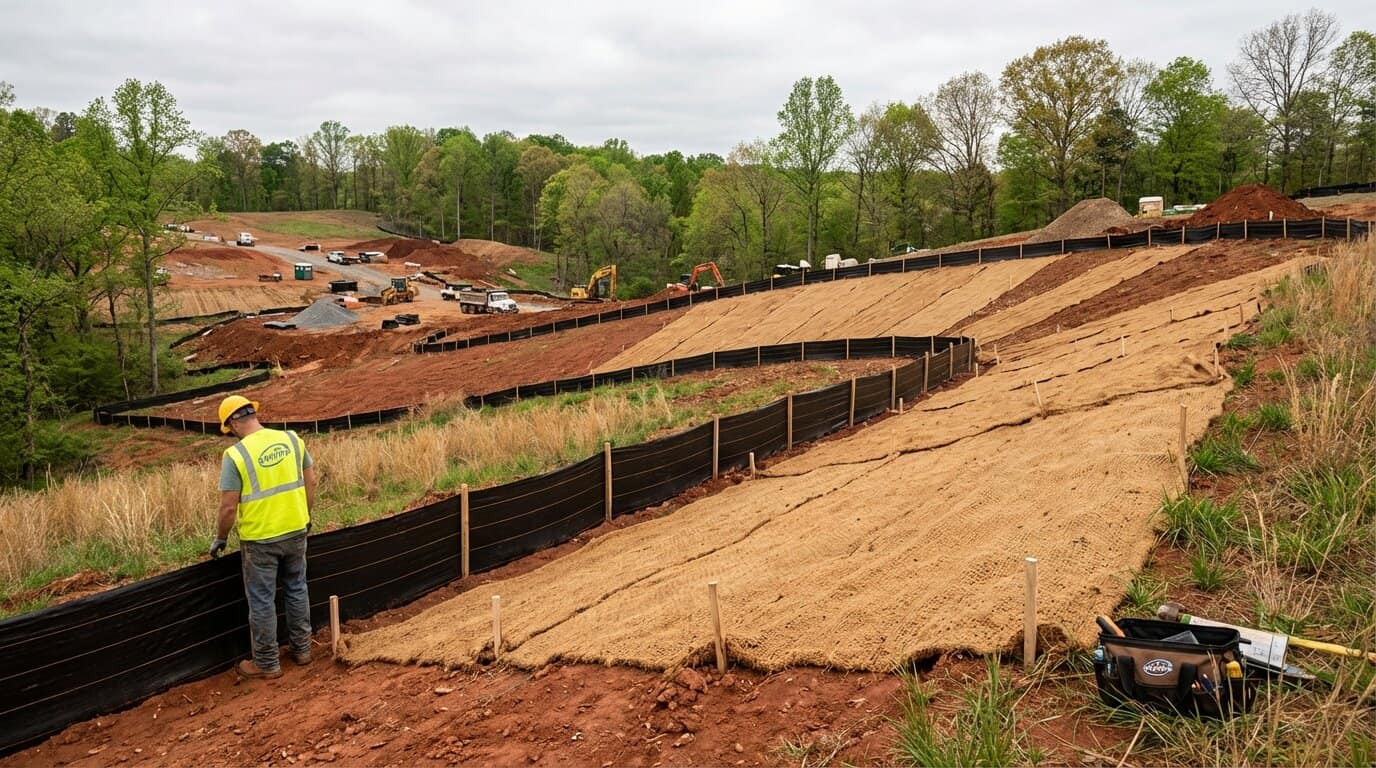
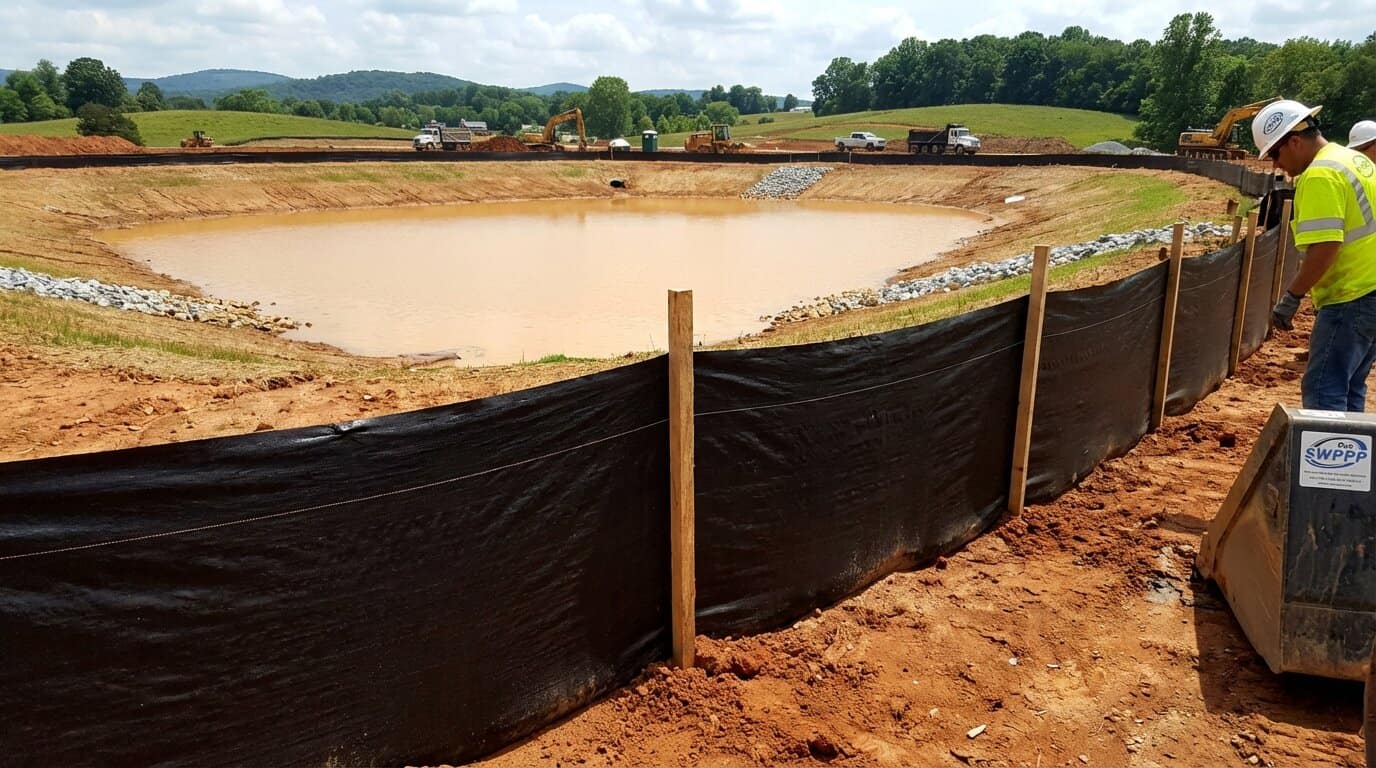
Erosion control stops soil from moving in the first place. Sediment control catches it before it leaves your site. You need both. Erosion control includes seeding, mulching, erosion control blankets, and tackifiers. Sediment control includes silt fences, sediment basins, inlet protection, and check dams.
Virginia’s clay soils can be especially tricky. When it rains, that red clay turns into a muddy mess that clogs streams and triggers violations. Your SWPPP needs to account for your soil type and install the right controls before clearing begins. Pro SWPPP – America’s #1 SWPPP Service tailors every plan to your site’s unique conditions, so you’re not guessing which BMPs will work.
One common mistake is waiting until after grading to install silt fences. By then, it’s too late. Install perimeter controls before you clear vegetation, and maintain them throughout the project. A torn silt fence is the same as no silt fence in the eyes of the law.
How Virginia Compares to Other States
If you’ve worked in Texas, you know TCEQ has its own quirks. Texas requires a site notice with your NOI number posted at the main entrance. If you’ve built in Georgia, you know the Georgia Environmental Protection Division loves detailed drainage maps. Virginia falls somewhere in the middle: strict on inspections, serious about enforcement, but flexible if you show good faith and quick corrective action.
Virginia also participates in the Chesapeake Bay restoration effort, which means extra scrutiny in certain watersheds. If your site drains to a Bay tributary, expect inspectors to look closely at your nutrient and sediment controls. The state has Total Maximum Daily Load limits in many areas, and your SWPPP may need additional BMPs to meet those limits.
Common Mistakes That Trigger Violations
We’ve seen it all. Here are the top mistakes that get contractors in hot water:
- No NOI or late NOI: Starting work without permit coverage is an automatic violation
- Generic SWPPP: Using a template without customizing it for your site
- Skipped inspections: Missing your weekly walk-through or post-storm inspection
- Poor documentation: No records of inspections, repairs, or rain events
- Failed BMPs: Silt fences down, sediment basins overflowing, or tracking mud onto public roads
Every one of these mistakes is avoidable. The state doesn’t expect perfection, but it does expect you to follow your plan and fix problems fast. If you document everything and show you’re trying, inspectors will work with you. If you blow them off, they’ll bring the hammer.
Not sure what your project needs? Take our SWPPP Quiz (link) or Schedule a Free SWPPP Consultation with CPESC Certified SWPPP Expert Derek E. Chinners.
How Pro SWPPP Makes Virginia Compliance Easy
Pro SWPPP – America’s #1 SWPPP Service has helped builders across Virginia get permitted fast and stay compliant. Our CPESC-certified team writes site-specific plans that pass inspection the first time. We handle your NOI submission, train your crew on BMP installation, and provide inspection checklists so nothing falls through the cracks.
We know Virginia’s soils, weather patterns, and watershed rules. We know which BMPs work on steep slopes and which ones fail in clay. And we know how to document everything so that if an inspector shows up, you’re ready. Our clients avoid fines, stay on schedule, and sleep better at night because they know their stormwater program is locked in.
Want to learn more about our process? Visit our About page to see why contractors trust us with their toughest sites. Or if you have questions, just reach out to our team and we’ll walk you through your options.
What Happens If You Get It Wrong?
Virginia DEQ can issue a notice of violation, which means you stop work until you fix the problem. They can also assess civil penalties up to $32,500 per day per violation. If sediment leaves your site and impacts a stream, the cleanup costs and fines can run into six figures. Even worse, your project gets a reputation, and future permits become harder to obtain.
The EPA can also step in for serious violations, especially if you’re near sensitive waters. Federal enforcement means federal fines, which start at $25,000 per day and can climb from there. For more on federal stormwater rules, check the EPA’s construction stormwater page.
The good news? Most violations are preventable. A solid SWPPP, timely NOI, and consistent inspections will keep you in the clear. That’s where Pro SWPPP – America’s #1 SWPPP Service comes in. We’ve seen what works and what doesn’t, and we build that experience into every plan we write.
Steps to Get Started Right Now
If you’re planning a project in Virginia, here’s your action plan:
- Confirm your project disturbs one acre or more
- Get a professional SWPPP written for your specific site
- Submit your NOI through Virginia’s online portal
- Install perimeter controls before clearing vegetation
- Conduct weekly inspections and log every rain event
- Keep your SWPPP on-site and up to date as conditions change
Don’t wait until the day before you want to start grading. NOI approval can take a few weeks, and writing a compliant SWPPP takes time if you want it done right. Plan ahead, and you’ll avoid delays.
FAQ
Who needs a SWPPP in Virginia?
Any construction project that disturbs one acre or more of land, or is part of a larger common plan of development that will disturb one acre or more, must have a SWPPP under Virginia’s Construction General Permit.
Do I need an NOI if I have a SWPPP?
Yes. The NOI is the form you file to get permit coverage. You must have both a SWPPP and an approved NOI before you start construction activities.
How often do I need to inspect my site?
Virginia requires weekly inspections and inspections within 24 hours after any rain event of 0.5 inches or more. You must document every inspection in your site log.
What are Best Management Practices?
BMPs are the techniques and controls you use to prevent pollution. Examples include silt fences, sediment basins, erosion control blankets, stabilized construction entrances, and regular street sweeping.
Can I use a template SWPPP?
No. Your SWPPP must be site-specific. A generic template will not pass inspection because it doesn’t account for your unique soil, slope, drainage, and activities.
What happens if I start work without an NOI?
Starting work without permit coverage is a violation of the Clean Water Act. You can face stop-work orders, fines up to $32,500 per day, and delays that cost far more than the permit fees.
How long does NOI approval take in Virginia?
Approval typically takes two to four weeks after submission. Plan ahead so you don’t miss your construction start date.
Do I need to update my SWPPP during the project?
Yes. If site conditions change, you add new activities, or inspectors find problems, you must update your SWPPP and document the changes.
Virginia SWPPP requirements in 2026 are clear: if you disturb an acre or more, you need a site-specific plan, a filed NOI, and a commitment to inspections and maintenance. The rules are strict, but they’re also straightforward. With the right team and the right plan, you’ll stay compliant, avoid fines, and keep your project moving. Pro SWPPP – America’s #1 SWPPP Service is here to make sure your Virginia project starts right and finishes clean. Visit Pro SWPPP today and get your project permitted fast.
1970-01-01 00:00:00posthttps://proswppp.com/?p=10248draftvirginia-swppp-requirements-your-2026-complete-guide-200