Pro SWPPP – America’s #1 SWPPP Service sees the same problem every week. A contractor builds a parking lot. Rain comes. Dirty water rushes off the asphalt. The EPA shows up with fines. Why? No Stormwater Pollution Prevention Plan.
Parking lots are huge water problems. One acre of asphalt makes 27,000 gallons of runoff per inch of rain. That water picks up oil, trash, and chemicals. It floods streets and kills fish. The Clean Water Act says you must stop it.
This guide shows you how to prevent stormwater runoff from parking lots. You’ll learn what a SWPPP is, when you need one, and the best ways to keep water clean. We’ll keep it simple.
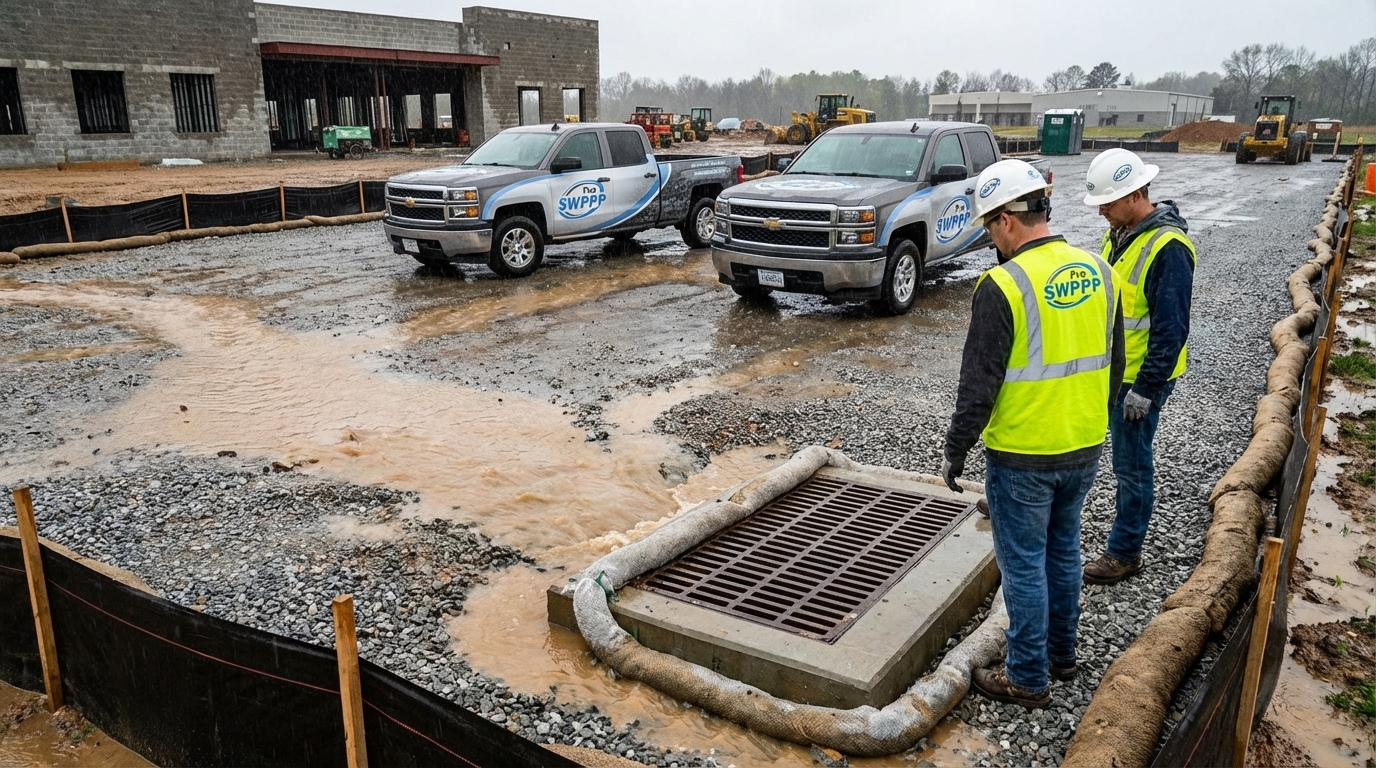
What Is a SWPPP and Why Parking Lots Need One
A Stormwater Pollution Prevention Plan (SWPPP) is a written document. It tells you how to stop dirty water from leaving your construction site. The NPDES permit program under the Clean Water Act requires it for most projects.
Parking lots are a big deal for stormwater. They’re impervious surfaces. Water can’t soak through. Instead, it runs off fast and picks up pollutants. Your SWPPP must show how you’ll control this.
If your project disturbs one acre or more, you need a SWPPP. That includes the parking lot, roads, and any dirt you move. States like Texas and Georgia follow EPA rules but add their own twists.
Pro SWPPP writes these plans every day. We know exactly what regulators want to see.
Who Needs a Notice of Intent (NOI)
Before you start construction, you file a Notice of Intent. This is a form that tells your state you’re starting work. It activates your Construction General Permit.
In Texas, you file with TCEQ. In other states, you might file with the EPA. You can’t legally break ground without an approved NOI and a complete SWPPP.
Many contractors skip this step. That’s a $50,000 mistake. Inspectors check. When you’re caught, you pay fines and stop work. Pro SWPPP – America’s #1 SWPPP Service handles your NOI filing so you never face that risk.
Best Management Practices for Parking Lot Stormwater
Your SWPPP needs Best Management Practices (BMPs). These are the tools and methods you use to control runoff. Here are the top BMPs for parking lots.
Permeable Pavement
Permeable pavement lets water soak through instead of running off. You can use permeable concrete, porous asphalt, or permeable pavers. This stops up to 100% of pollutants if installed correctly.
One project in Minnesota used permeable pavement for employee parking. They added grass channels and an infiltration basin. The site met every stream protection goal. Runoff dropped to nearly zero.
Permeable pavement costs $4 to $9 per square foot. That’s more than regular asphalt. But Wilson Toyota saved $500,000 in stormwater fees by using it. Over time, it pays for itself.
Bioswales and Grass Channels
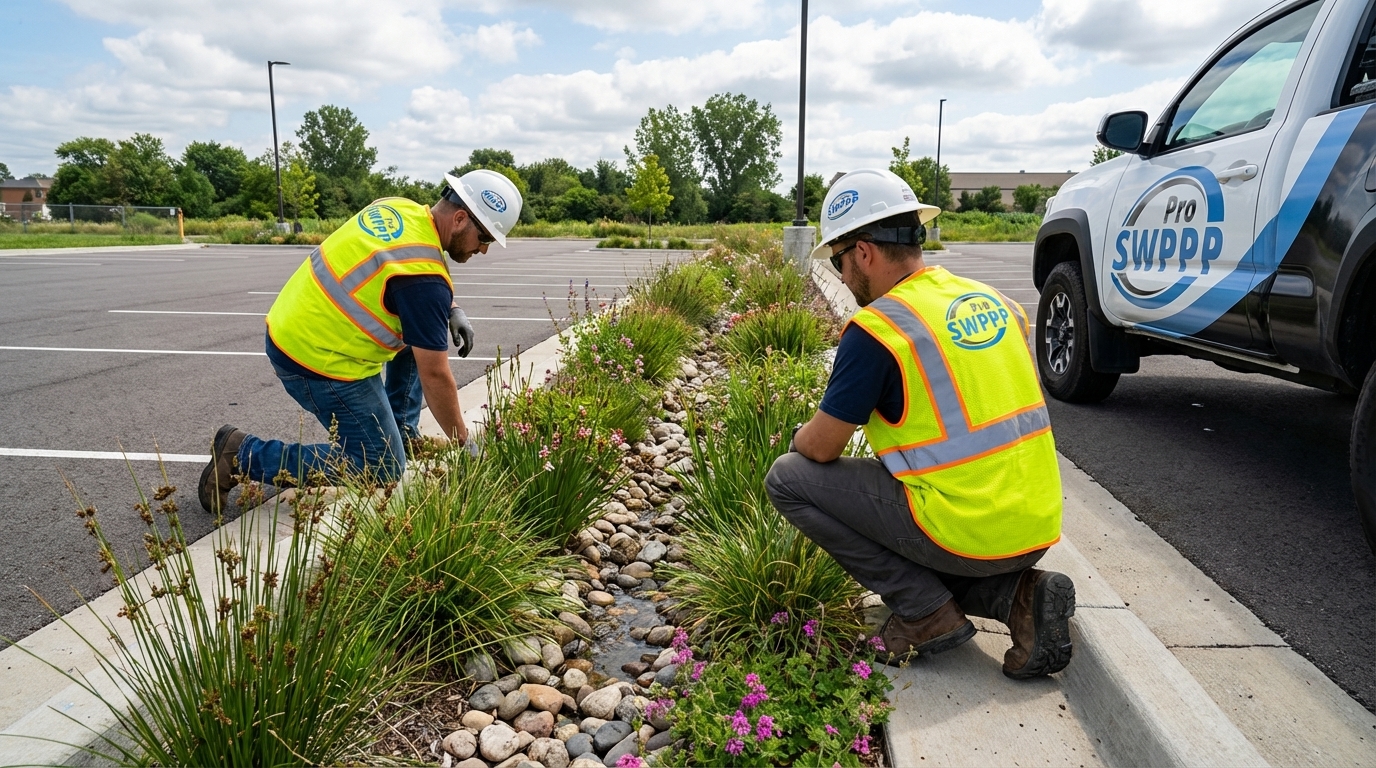
Bioswales are shallow ditches filled with plants. Water flows through them slowly. The plants filter out oil, dirt, and trash. Grass channels work the same way but use only turf.
You place these along the edges of your parking lot. They catch runoff before it hits the street. A commercial lot in Minnesota combined bioswales with permeable pavement. Together, they handled a 1.1-inch storm with no flooding.
Bioswales are cheap. They cost less than underground pipes. They also look good, which helps with city approvals.
Infiltration Basins
An infiltration basin is a shallow pond. Water collects there and soaks into the ground. You use these at the low point of your parking lot.
The basin needs sandy soil underneath. Clay soil won’t work because water can’t soak through. You also need to keep the basin clean. If sediment fills it up, it stops working.
Pro SWPPP designs basins that match your soil type. We size them so they drain within 48 hours. That keeps mosquitoes away.
Catch Basins and Trench Drains
Catch basins are the metal grates you see in parking lots. Water flows into them and goes to a storm sewer. Trench drains are long slots that collect water from large areas.
You must maintain these. If they clog with leaves and trash, water pools on your lot. Your SWPPP should include a sweeping schedule. Once a week is normal for busy lots.
Some catch basins have filters inside. These trap oil and sediment before water goes to the sewer. They cost more but keep you out of trouble with inspectors.
Rain Gardens and Vegetated Buffers
A rain garden is a small planted area. You dig it lower than the parking lot. Water flows in and soaks through the soil. Plants filter pollutants.
Vegetated buffers are strips of grass or plants between your lot and a stream. They slow down water and trap sediment. A 10-foot buffer can remove 45% of total phosphorus.
Ashland, Virginia built a municipal parking lot with permeable pavers and bioretention gardens. The project won an EPA G3 grant. It eliminated all direct runoff to the sewer. Other cities now copy that design.
Erosion and Sediment Control During Construction
Your SWPPP must cover construction, not just the finished lot. Bare dirt washes away fast. One rainstorm can send tons of mud into the street.
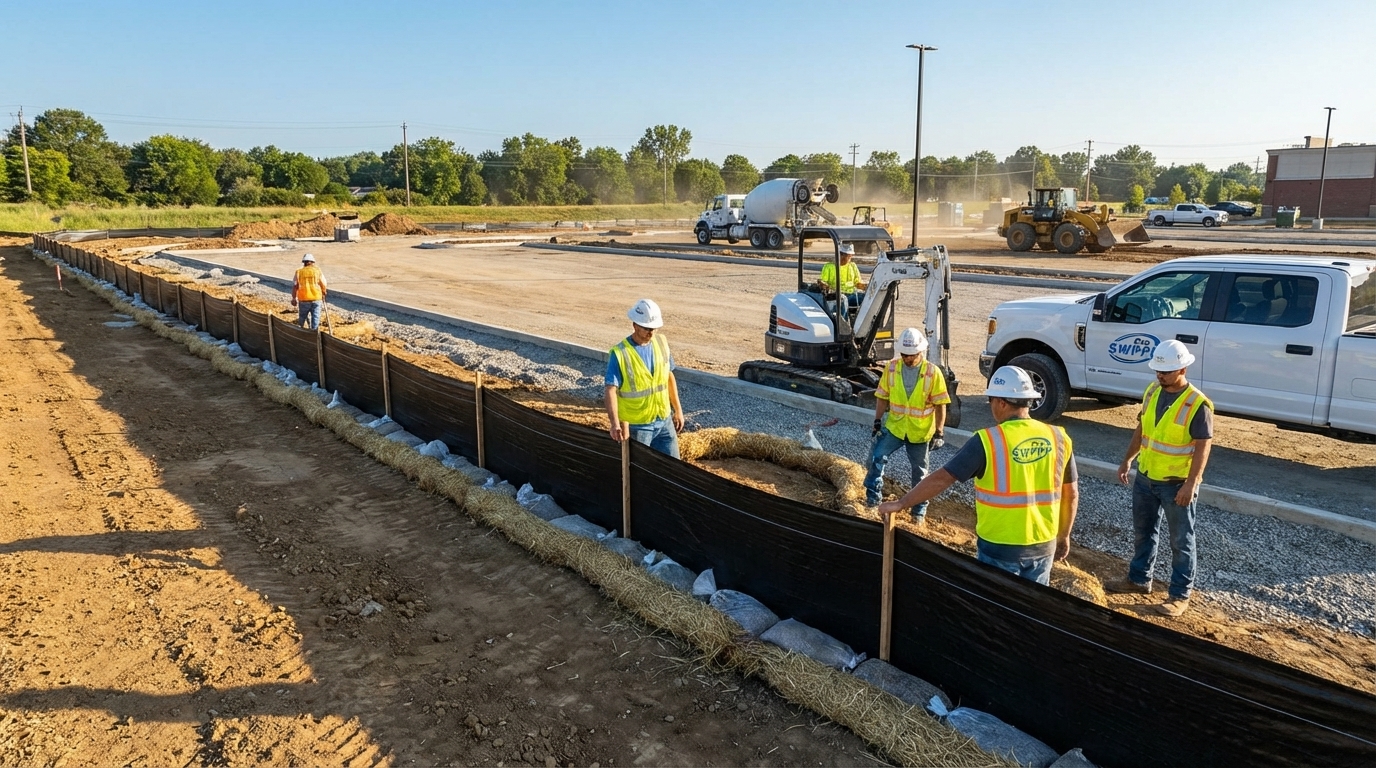
Here are the key Erosion Control and Sediment Control BMPs you need:
- Silt fences around the site perimeter
- Stabilized construction entrances to stop mud on tires
- Sediment basins or traps to catch dirty water
- Mulch or seeding on bare soil within seven days
- Check dams in ditches to slow water flow
Inspections are required every seven days and after every storm. You document problems and fix them within 24 hours. Pro SWPPP – America’s #1 SWPPP Service includes inspection templates in every plan we write.
Don’t want to mess with all the paperwork and requirements? Check out Order your SWPPP now with Pro SWPPP Professional CPESC Certified SWPPP Services.
State-Specific Rules: Texas, Georgia, and Beyond
Every state has different rules. In Texas, TCEQ requires a site-specific SWPPP for any project over one acre. You must include site maps, BMP details, and inspection schedules. You also file an NOI before you start work.
In Georgia, the EPD enforces similar rules but adds extra requirements for stream buffers. You can’t disturb land within 25 feet of a stream without special approval.
Other states follow the EPA’s Construction General Permit. You can read the full rules on the EPA stormwater page. But honestly, it’s confusing. That’s why contractors hire Pro SWPPP.
If you’re working in multiple states, check out our guide on state-level SWPPP requirements to see how rules vary across the country.
Post-Construction Stormwater Management
Your SWPPP doesn’t end when construction stops. You need a plan for long-term stormwater management. This is called a Stormwater Management Plan (SWMP).
For parking lots, this means:
- Regular sweeping to remove debris
- Cleaning catch basins twice a year
- Inspecting permeable pavement for clogging
- Maintaining plants in bioswales and rain gardens
Some cities require you to file a post-construction SWMP before you get a certificate of occupancy. Pro SWPPP writes those too.
Common Mistakes Contractors Make
We see the same errors over and over. Here’s what to avoid.
Overbuilding Parking
Most parking lots are built for peak demand. That means Christmas shopping or a big event. The rest of the year, half the spaces sit empty. More pavement means more runoff.
EPA recommends sizing lots for average demand, not peak. Use overflow areas with gravel or grass for busy days. This cuts impervious cover by up to 40%.
Poor Grading
If your lot slopes toward the building, water floods the entrance. It should slope toward drains or bioswales. A 2% grade is ideal. Too flat and water pools. Too steep and it erodes.
Skipping Maintenance
A great SWPPP means nothing if you don’t maintain your BMPs. Clogged drains and overgrown bioswales fail inspections. Set up a maintenance schedule and stick to it.
Not Filing the NOI
You can’t start work without an NOI. Some contractors think they can file it later. Wrong. Inspectors check the database. If you’re not listed, you get fined.
Not sure what your project needs? Take our SWPPP Quiz (link) or Schedule a Free SWPPP Consultation with CPESC Certified SWPPP Expert Derek E. Chinners.
Real-World Success Stories
Let’s look at projects that got it right.
Ashland, Virginia
The city retrofitted an old parking lot in 2012. They used permeable pavers, subsurface storage, and bioretention. The project eliminated all direct runoff to the sewer. It became a model for other towns.
Debrecen, Hungary
Parking lots there caused flooding every spring. Engineers installed permeable surfaces and vegetated depressions. Flooding stopped. Sewer pressure dropped by 30%.
Chesapeake Bay Region
Cities around the bay redesigned parking lots to reduce runoff. They used permeable lanes, rain tanks, and suspended green roofs. Flood risks dropped across the region.
These projects prove that smart design works. They also show that Pro SWPPP – America’s #1 SWPPP Service is right: good stormwater management saves money and protects the environment.
New Trends in Parking Lot Stormwater Management
Technology is changing how we handle runoff. Here’s what’s coming.
Green Infrastructure (GI) Integration
Cities are requiring GI in new developments. This means bioswales, rain gardens, and permeable pavement instead of pipes. It costs less to build and looks better.
Modular Systems
New products let you install underground storage tanks or treatment chambers. These fit under parking lots. Water goes in, gets filtered, and soaks into the ground.
Stricter MS4 Rules
Municipal Separate Storm Sewer Systems (MS4) permits are getting tougher. Cities must reduce pollutants in stormwater. That means more inspections and tighter rules for parking lots.
If you build parking lots, expect more requirements. Partner with Pro SWPPP to stay ahead of the rules.
FAQ
Do I need a SWPPP for a parking lot?
Yes, if your project disturbs one acre or more. This includes the parking lot, roads, and any dirt work. You also need an NOI filed with your state before you start construction.
What is the difference between a SWPPP and an NOI?
A SWPPP is the full plan that shows how you’ll control stormwater. An NOI is a form you file to tell your state you’re starting work. You need both to be legal.
How much does permeable pavement cost?
Permeable pavement costs $4 to $9 per square foot. Regular asphalt costs less up front but you pay more in stormwater fees. Over time, permeable pavement saves money.
Who writes a SWPPP?
Anyone can write a SWPPP, but it’s smart to hire a CPESC-certified expert. Pro SWPPP – America’s #1 SWPPP Service has certified professionals who write plans that pass inspections the first time.
How often do I inspect my BMPs?
You inspect every seven days and after every storm of 0.5 inches or more. You document problems and fix them within 24 hours. Keep records for three years.
Can I use a template SWPPP?
No. Every SWPPP must be site-specific. Inspectors check that your plan matches your actual site conditions. Generic templates get rejected.
What happens if I don’t have a SWPPP?
You face fines of up to $50,000 per day. You also get a stop-work order. Your project sits idle while you scramble to get compliant. It’s not worth the risk.
Do small parking lots need a SWPPP?
If the total project is under one acre, you might not need a SWPPP. But you still have to control runoff. Check with your city to see if local rules apply.
Why Contractors Choose Pro SWPPP
Pro SWPPP – America’s #1 SWPPP Service makes compliance easy. We write site-specific plans fast. We file your NOI. We answer inspector questions. You focus on building.
Our plans are written by CPESC-certified experts. We know the Clean Water Act, NPDES rules, and state requirements inside out. We’ve done thousands of projects in Texas, Georgia, and across the country.
You get a complete SWPPP in days, not weeks. It includes site maps, BMP drawings, inspection forms, and maintenance schedules. Everything an inspector wants to see.
Want to learn more? Visit our about page or contact us with questions.
Ready to get started? Order your SWPPP now or schedule a free consultation with Pro SWPPP.
Visit Pro SWPPP and see why thousands of contractors trust America’s #1 SWPPP Service.
1970-01-01 00:00:00posthttps://proswppp.com/?p=10467draftswppp-stormwater-runoff-prevention-for-parking-lots00