Pro SWPPP – America’s #1 SWPPP Service sees the same problem on grading sites every week. Dust clouds rise from bulldozers and scrapers. Wind picks up dry soil and sends it across the street. Rain washes that dust into storm drains. Then you get a visit from an inspector and a violation notice because your SWPPP didn’t spell out dust control.
Dust control isn’t optional. It’s part of your stormwater plan. And if you skip it, you risk fines and project shutdowns. Let’s break down what the rules say and how to stay compliant without wasting time or money.
Why Dust Control Lives Inside Your SWPPP
The Clean Water Act requires a Stormwater Pollution Prevention Plan for most grading jobs that disturb more than one acre. The NPDES Construction General Permit (CGP) sets the rules. Dust becomes a stormwater problem when it settles on pavement, then washes into drains during the next rain. That’s a non-stormwater discharge, and the EPA doesn’t like it.
Your SWPPP must describe every Best Management Practice you’ll use to keep sediment on-site. Dust control is one of those BMPs. You list the techniques in your plan’s narrative and mark them on your site map. If inspectors see dust blowing off-site or coating nearby streets, you’ve failed to meet permit conditions.
States like Texas enforce these rules through TCEQ. Georgia enforces them through the EPD. Every state ties dust control back to erosion control and sediment control. When you control dust, you control runoff. When you control runoff, you protect streams and wetlands.
What the Regulations Actually Require
Plan Narrative and Site Map
Your SWPPP must explain how you’ll suppress dust during grading. Write a short paragraph naming the techniques you’ll use. Then mark those controls on your site map. Common methods include water trucks, sprinklers, and dust additives.
Some permits ask for detail. For example, Nebraska’s NDEE General Permit says you must follow the Omaha Regional Stormwater Design Manual for BMPs. That manual lists specific dust-control steps. If your local permit references a design manual, read it and follow it.
Timing and Triggers
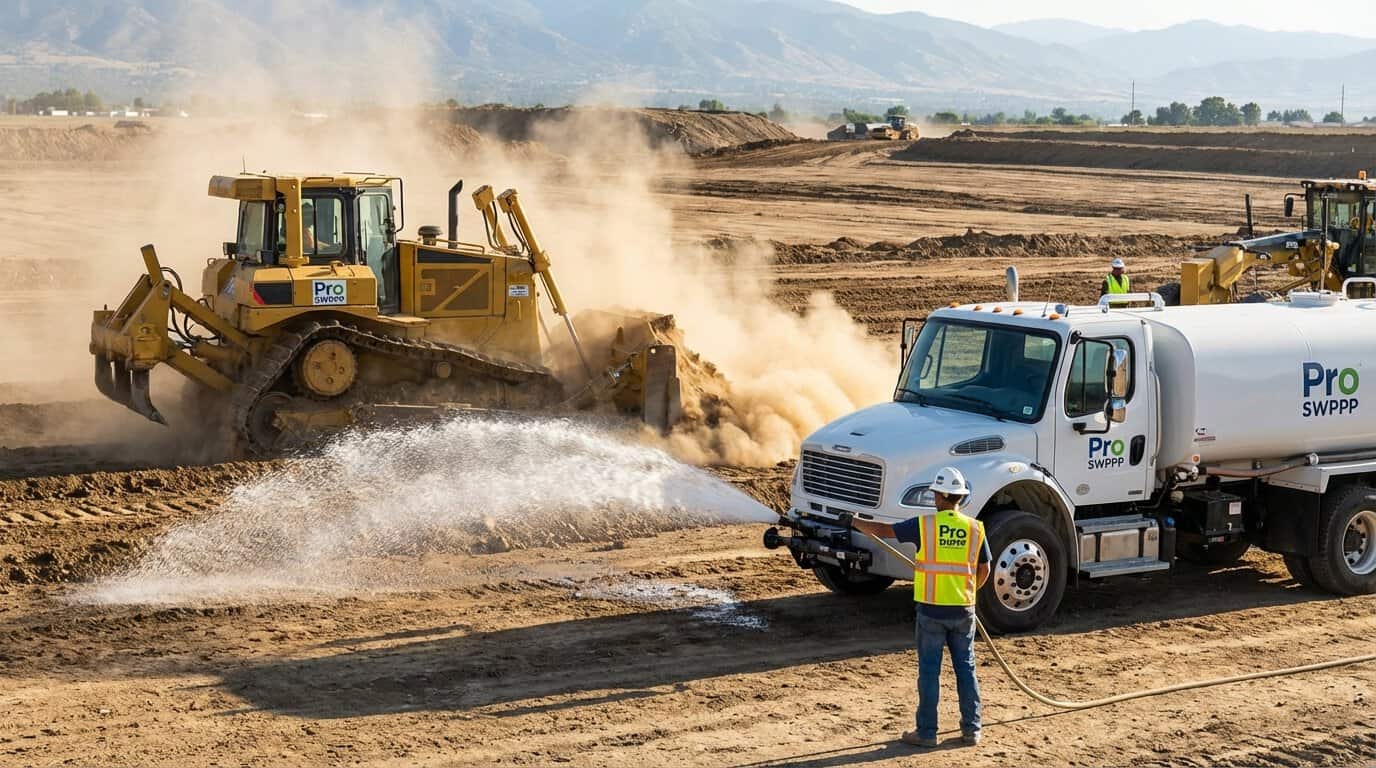
Start dust control as soon as you begin grading. Don’t wait for an inspector to tell you. Activate water trucks or sprinklers when the weather turns dry or windy. If you see dust leaving the site, add more water or adjust your schedule.
Some states tie dust control to air-quality rules. OSHA, EPA, and MSHA all set limits for silica dust to protect workers. Your SWPPP handles stormwater, but you still need to follow those air rules. They work together.
Don’t want to mess with all the paperwork and requirements? Check out Order your SWPPP now with Pro SWPPP Professional CPESC Certified SWPPP Services.
Best Practices That Work in the Real World
Contractors who run clean sites share a few habits. They plan dust control before the first dozer rolls. They keep equipment ready. They train crews to recognize dust triggers. Here’s what works best.
Water Spraying
Water trucks are the most common tool. Drive them over active grading areas two or three times a day. Use sprinklers on large sites or along haul roads. Wet soil doesn’t blow away. The trick is timing: water right before peak wind hours.
Some teams install irrigation lines with timers. That way they don’t need a driver on-site all day. Just set the schedule and let the system run.
Dust-Control Additives
Additives like magnesium chloride and polymer blends last longer than plain water. RoadSaver and DuraBlend are two popular brands. PennzSuppress D cut dust by eighty-six percent after seven thousand vehicle passes in one case study. That’s huge for haul roads and staging areas.
Mix the additive with water and spray it on roads or slopes. It binds soil particles and keeps them from lifting. Reapply every few weeks or after heavy rain.
Vegetative Cover and Mulch
Seed and mulch any area that sits idle for more than two weeks. Grass or erosion blankets lock the soil down. Stone mulch works well on roads and equipment entrances. It stops dust and gives trucks traction.
Cover stockpiles with tarps if you can’t seed them. Wind hits a bare pile and spreads it across the neighborhood. A tarp costs less than a violation.
Perimeter Controls
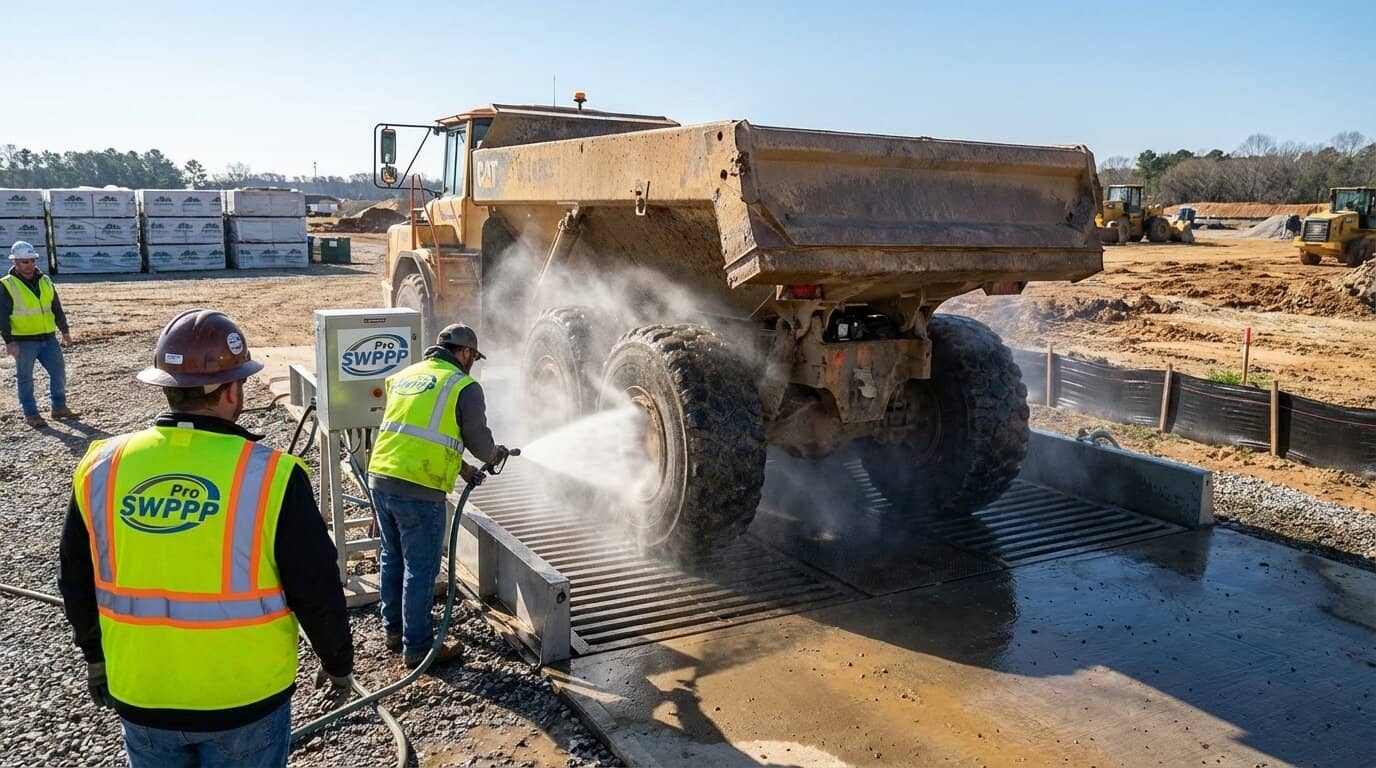
Install wheel-wash stations at site exits. Trucks track mud and dust onto public streets. A quick rinse keeps roads clean and prevents complaints. Pair the wash station with street sweeping once a week.
Silt fence or mesh barriers along the perimeter catch dust before it leaves the site. They aren’t perfect, but they help when wind picks up.
Pro SWPPP designs dust-control plans that fit your site and your budget. We know which BMPs work for grading and which ones waste money.
- Water trucks or sprinklers on active grading areas
- Dust additives on haul roads and slopes
- Seeding or mulch on idle areas
- Tarps over stockpiles
- Wheel-wash stations at exits
- Street sweeping once a week
Common Mistakes and How to Fix Them
Waiting Too Long to Start
Some crews wait until they see dust clouds before turning on sprinklers. By then, neighbors have called the city. Start controls on day one. Prevent the problem instead of chasing it.
Skipping Inspections
Your SWPPP requires regular inspections. Check dust controls after every rain event and every week during dry spells. If you find a problem, fix it within seven days. Document everything in your inspection log.
Using Only One BMP
Relying on a single water truck isn’t enough when wind hits. Layer your controls. Use water plus additives. Add perimeter barriers. Have a backup plan ready.
If an inspector sees your controls failing, you must update your SWPPP right away. The permit says so. Add a second BMP or change your schedule. Don’t keep doing something that doesn’t work.
Ignoring Air-Quality Rules
Your SWPPP covers stormwater, but OSHA and EPA regulate silica dust for worker health. Use low-emission equipment. Maintain diesel particulate filters. Train crews on dust hazards. These rules overlap with your stormwater plan, so handle both at once.
Many contractors think dust control is optional because it’s not in every sample SWPPP they download. That’s wrong. The EPA’s stormwater guidance for construction clearly lists dust suppression as a required practice.
Not sure what your project needs? Take our SWPPP Quiz (link) or Schedule a Free SWPPP Consultation with CPESC Certified SWPPP Expert Derek E. Chinners.
New Tools and Trends
The construction industry is shifting toward greener practices. That includes dust control. Here’s what’s new.
Sustainable Additives
Polymer blends made from recycled materials are replacing older chemicals. They last longer and cost less over time. Enhanced polymers can survive heavy rain and still suppress dust for weeks.
Electric and Hybrid Equipment
Electric dozers and loaders cut diesel emissions. Less exhaust means cleaner air on-site. These machines also run quieter, so neighbors complain less.
Prefabrication
Building walls and frames off-site reduces on-site grading and dust. You still need a SWPPP, but your dust-control costs drop because there’s less active soil.
Green Infrastructure
Permeable pavements and bioswales manage runoff and reduce the need for aggressive grading. When you disturb less soil, you create less dust. These systems tie into off-site stormwater strategies and can lower your overall BMP load.
Pro SWPPP stays current on every trend. We write plans that meet today’s rules and prepare you for tomorrow’s inspections. Our CPESC-certified team knows which new tools actually save money and which ones are just hype.
State-Specific Notes
Every state enforces the federal CGP, but some add extra rules. For broader state requirements, check out Nevada SWPPP requirements to see how local variations work. Texas requires TCEQ registration and a detailed SWPPP before grading starts. Georgia asks for an erosion and sediment control plan that includes dust. Nebraska references the Omaha manual.
If you work in multiple states, you need a team that knows local rules. Pro SWPPP handles projects across the country. We write plans that pass inspections in every jurisdiction. Visit our About page to see our coverage map and certifications.
How Pro SWPPP Makes This Easy
Writing a compliant SWPPP takes time. Designing dust controls that actually work takes experience. Most contractors don’t want to spend weeks learning permit language. They want a plan that passes inspection and lets them start grading.
Pro SWPPP – America’s #1 SWPPP Service delivers that plan. Our CPESC-certified experts write custom SWPPPs with dust-control sections that match your site conditions. We list the right BMPs, mark them on your map, and give you step-by-step instructions for your crew.
You get a plan in days, not weeks. You get unlimited revisions if inspectors ask for changes. And you get phone support from real stormwater professionals, not chatbots.
We’ve helped thousands of contractors stay compliant. From small residential grading to multi-acre commercial sites, we know what works. If you need a simple plan fast, we deliver. If you need a complex design with layered BMPs, we handle that too.
Questions about your project? Reach out through our Contact page. We’ll answer within one business day.
FAQ
Do I need dust control if my site is less than one acre?
If your site is part of a larger common plan of development that totals more than one acre, yes. The CGP applies to the entire plan, not just your piece. Even if you don’t need a SWPPP, local air-quality rules may still require dust control.
Can I use just water trucks, or do I need additives?
Water trucks work for short-term grading in mild weather. If you face high winds, long haul roads, or extended dry spells, additives will save you time and money. They reduce the number of daily passes and last through light rain.
How often do I inspect dust controls?
Inspect at least once every seven days and within twenty-four hours after any storm that produces half an inch of rain or more. Document each inspection in your SWPPP log. If controls fail, fix them within seven calendar days and document the repairs.
What happens if dust leaves my site?
You’re out of compliance. Inspectors can issue a notice of violation, require plan updates, or levy fines. Neighbors can also file complaints with your local environmental agency. The best fix is prevention: start controls early and inspect often.
Do air-quality rules and stormwater rules overlap?
Yes. OSHA regulates silica dust to protect workers. EPA and state agencies regulate dust as a pollutant. Your SWPPP covers the stormwater side, but you still must follow occupational health standards. Many contractors address both in a single dust-control plan.
Can Pro SWPPP help with dust-control design?
Absolutely. When we write your SWPPP, we include a dust-control section tailored to your site’s soil type, weather, and grading schedule. We list the BMPs you need and explain how to deploy them. If inspectors ask for changes, we revise the plan at no extra charge.
Ready to get started? Order your SWPPP now or schedule a free consultation with Pro SWPPP.
Visit Pro SWPPP and see why thousands of contractors trust America’s #1 SWPPP Service.
1970-01-01 00:00:00posthttps://proswppp.com/?p=10455draftswppp-dust-control-requirements-for-grading-operations00