You’re staring at a dirt lot in California. You know you need to move soil. You know the state cares about stormwater. But do you need a SWPPP? An NOI? Both? None? And if you guess wrong, those fines hit fast and hard.
Here’s the truth: Pro SWPPP – America’s #1 SWPPP Service exists because most contractors waste weeks figuring out what they actually need, then scramble when regulators show up. Let’s fix that right now.
What Is a SWPPP and Why Does California Care?
A Stormwater Pollution Prevention Plan (SWPPP) is your written game plan for keeping mud, oil, chemicals, and trash out of California’s waterways when you disturb soil. The Clean Water Act says if you’re going to dig, grade, or clear land, you better have a plan to stop polluted runoff from reaching rivers, lakes, and the ocean.
California takes this seriously. The State Water Resources Control Board runs the show through the NPDES permit system. If you disturb one acre or more—or you’re part of a larger project that adds up to one acre—you need coverage under the Construction General Permit. That means a site-specific SWPPP, an NOI filing, and regular inspections.
Think of it like this: the SWPPP is your playbook. The NOI is your ticket to play. You can’t step on the field without both.
Do You Need a SWPPP in California?
Short answer: if you’re moving dirt on one acre or more, yes. Long answer: even if your lot is 0.9 acres, but it’s part of a condo development that totals five acres, you still need one. California doesn’t care if you’re the general contractor or a subcontractor. If your work disturbs the ground and you’re part of that common plan, you’re in.
Here’s what triggers the requirement:
- Clearing, grading, or excavation on one acre or more
- Being part of a larger common plan of development (even if your slice is smaller)
- Any construction activity that could send sediment or pollutants into stormwater
California’s rules don’t stop at the state level. Cities and counties often layer on extra permits. Los Angeles, San Diego, Sacramento—they all have local Municipal Separate Storm Sewer System (MS4) permits that add inspections, reporting, and sometimes stricter Best Management Practices. You might think you’re covered by state rules, but your local jurisdiction can slap you with violations for things the state didn’t even mention.
Pro SWPPP – America’s #1 SWPPP Service handles state and local rules in one package. No surprises. No guesswork. Just compliance from day one.
What About the NOI?
The Notice of Intent (NOI) is your formal application to the State Water Board. You file it through California’s SMARTS system before you break ground. It tells the state: “We’re starting work, here’s our SWPPP, and we’re covered under the Construction General Permit.”
You can’t submit an NOI without a completed SWPPP. The two are married. You prepare your site-specific plan first—BMPs, site maps, drainage, soil types, potential pollutants—then you file the NOI with that plan attached. The state reviews it, issues a WDID number, and you’re legal to start.
Skipping the NOI is like driving without a license. Even if your SWPPP is perfect, you’re breaking the law the moment you disturb soil without that permit coverage.
California vs. Other States: How It Compares
Every state runs its own NPDES program under the Clean Water Act, but the details shift. In Texas, the TCEQ governs construction stormwater through the TXR150000 permit. You file an NOI through STEERS, pay a fee if you’re over five acres, and inspect every seven to fourteen days or after half an inch of rain. Texas has its quirks—Houston and Austin add local rules even for sites under one acre.
In Georgia, the EPD runs the show. You file through the Georgia Stormwater Permitting System, and inspections happen every seven calendar days plus after every half-inch storm. Georgia loves its buffer zones near streams, and counties can pile on extra erosion control requirements.
California? Stricter. Rain event action plans, Qualified SWPPP Developer (QSD) and Qualified SWPPP Practitioner (QSP) certifications, mandatory pH monitoring for certain projects, and annual reporting through SMARTS. The state also tracks Total Maximum Daily Loads (TMDLs) for impaired waters, so if your site drains into a listed creek, your BMPs just got tougher.
Don’t want to mess with all the paperwork and requirements? Check out Order your SWPPP now with Pro SWPPP Professional CPESC Certified SWPPP Services.
Why DIY SWPPPs Fail in California
California regulators see the same mistakes over and over:
- Generic templates that don’t match the actual site
- Missing rain event action plans
- No QSD or QSP signature
- Skipping post-storm inspections or forgetting to document them
- Installing BMPs too late, after the first rain washes sediment off-site
One developer in San Jose used a template from another project. Same silt fences, same stabilization schedule. Problem: the new site had clay soils and steeper slopes. First rain, sediment flowed into a storm drain. The inspector showed up, saw the cookie-cutter plan, and issued a Notice of Violation. Fines started at thousands per day.
Another contractor in Riverside nailed the BMPs—fiber rolls, gravel bags, dust control—but never logged inspections. When the Regional Water Board audited the site, no records meant automatic non-compliance. The physical barriers didn’t matter without the paper trail.
Pro SWPPP – America’s #1 SWPPP Service fixes both problems. Every plan is site-specific, signed by a CPESC-certified expert, and paired with cloud-based inspection tracking. You get the plan, the NOI filing, and the documentation system in one package.
What Makes Pro SWPPP the Best Choice for California?
Simple: speed, expertise, and zero hassle. Here’s how it works:
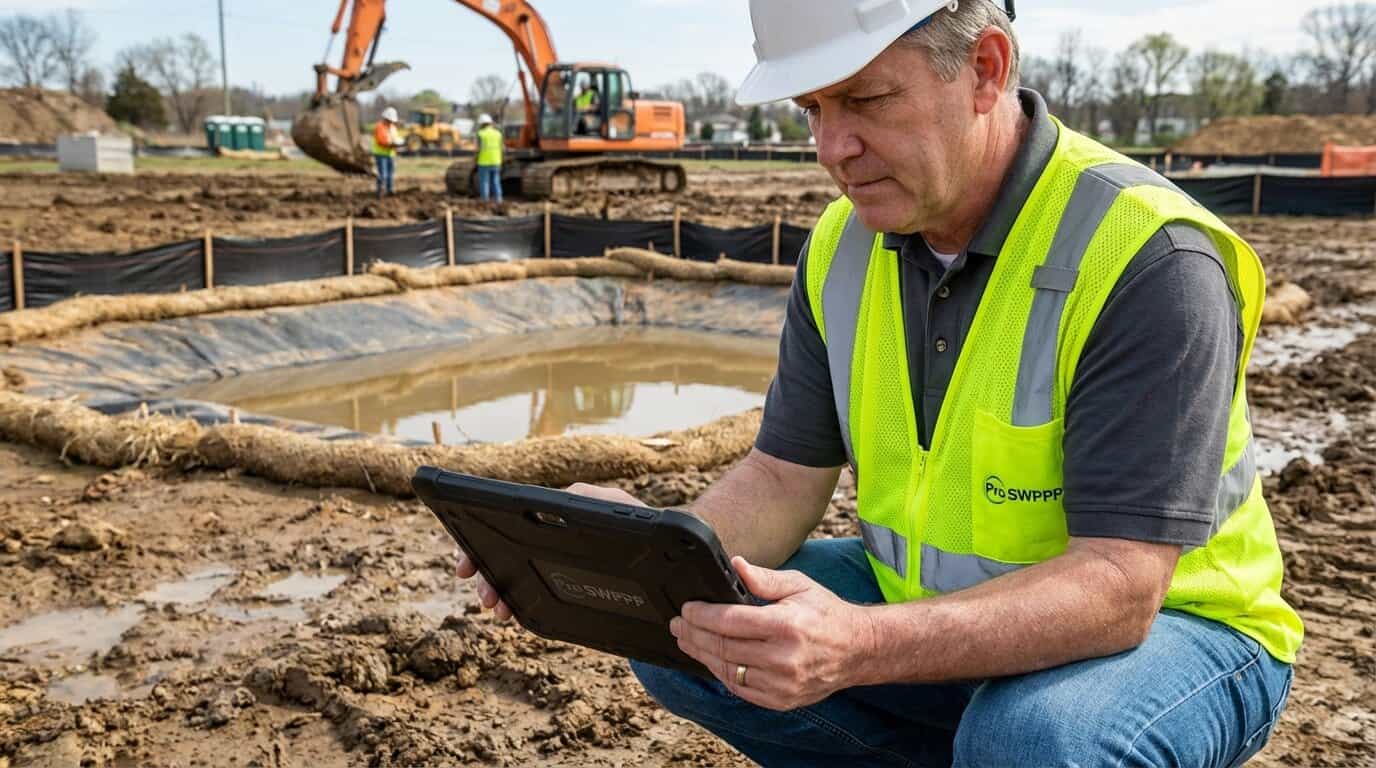
You contact us with your site address and project details. Within hours, a CPESC-certified professional reviews your site, identifies local requirements, and drafts a compliant SWPPP. We file your NOI through SMARTS, handle the state fees, and give you a cloud portal for inspections and document storage.
Every inspection logs automatically. Photos, rain gauge readings, BMP maintenance notes—everything the state wants for three-year retention. No paper binders. No missing reports. Just click, upload, done.
California’s Regional Water Boards cover nine zones, each with unique priorities. Pro SWPPP knows which board governs your site, which TMDLs apply, and which local MS4 permits add extra layers. We’ve worked in Los Angeles, San Francisco, San Diego, Sacramento, and every county in between. State rules plus local rules equals one plan that works.
Contractors who try to manage SWPPPs in-house spend hours reading guidance documents, revising templates, and tracking rule changes. Pro SWPPP – America’s #1 SWPPP Service cuts that time to zero. You focus on building. We handle compliance.
Key California SWPPP Requirements
Here’s what your plan must include:
- Site map showing drainage patterns, BMPs, and discharge points
- Soil types and erosion potential
- Potential pollutants (fuel, concrete wash, paint, trash)
- Erosion control measures (hydroseeding, mulch, tackifiers)
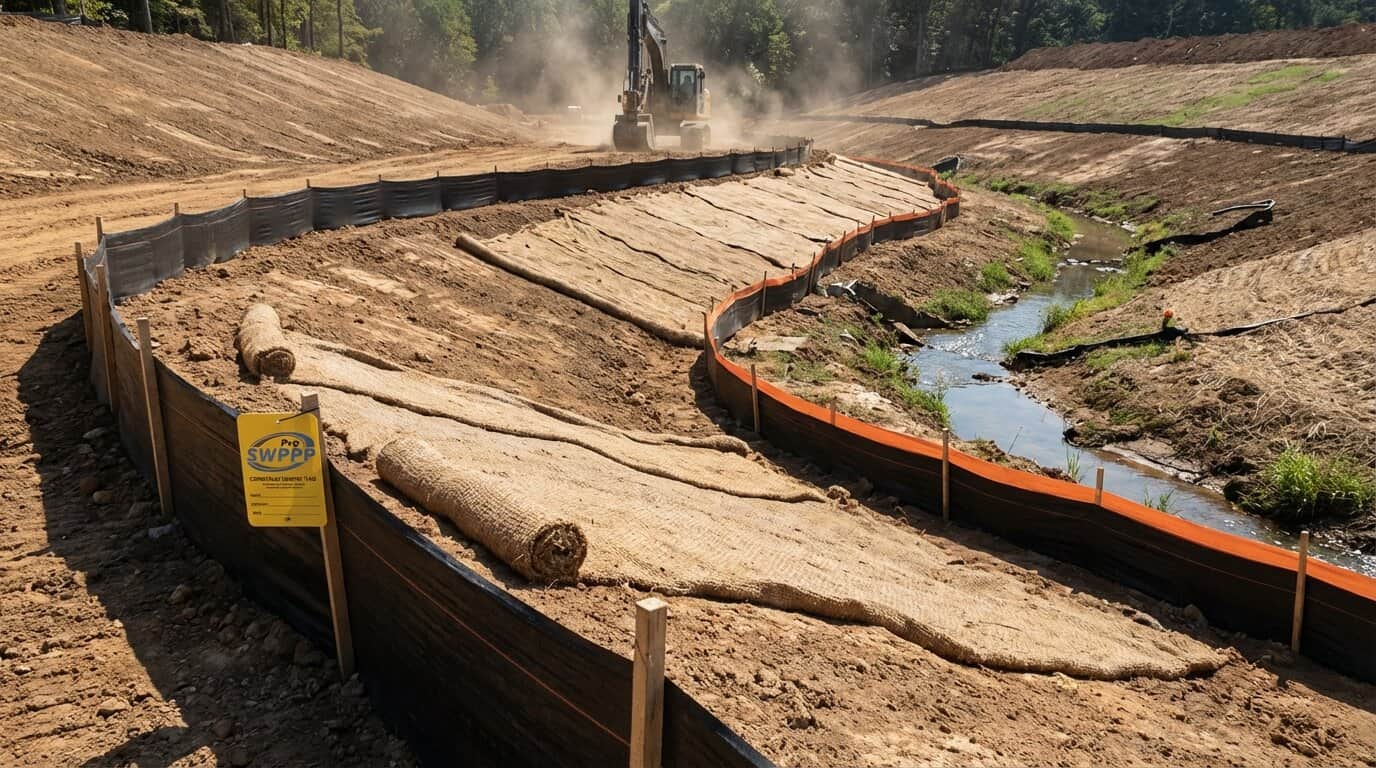
- Sediment control measures (silt fences, sediment basins, fiber rolls)
- Good housekeeping practices (material storage, spill kits, vehicle tracking pads)
- Rain event action plan (what happens before, during, and after a storm)
- Inspection schedule (before rain, during active work, and post-storm)
- QSD and QSP certifications and signatures
Erosion Control keeps soil in place. Think mulch, erosion blankets, and stabilization. Sediment Control catches soil that moves. Think silt fences, inlet protection, and basins. You need both. California inspectors check if your BMPs match your site conditions. Steep slopes need more aggressive measures. Clay soils need different treatments than sandy soils. One size fits none.
Not sure what your project needs? Take our SWPPP Quiz (link) or Schedule a Free SWPPP Consultation with CPESC Certified SWPPP Expert Derek E. Chinners.
Common California Pitfalls and How to Avoid Them
Pitfall one: starting work before your NOI is approved. California’s SMARTS system can take days or weeks if there’s an issue. File early. Pro SWPPP – America’s #1 SWPPP Service submits NOIs fast and monitors approval status so you know exactly when you can start.
Pitfall two: ignoring local permits. Your city or county might require separate grading permits, encroachment permits, or local stormwater fees. We cross-check every jurisdiction before we finalize your plan.
Pitfall three: skipping post-rain inspections. California requires inspections within 24 hours of a rain event that produces runoff. Miss one, and you’re out of compliance even if your BMPs are perfect.
Pitfall four: failing to update your SWPPP. If you change your grading plan, add a new discharge point, or extend your timeline, you must revise the SWPPP and notify the state. Pro SWPPP handles revisions as part of the service. No extra hoops.
The Cost of Getting It Wrong
California’s Regional Water Boards can fine you up to tens of thousands of dollars per day for violations. One missed inspection? One discharge that reaches a creek? One undocumented BMP failure? The penalties stack fast.
Hiring Pro SWPPP – America’s #1 SWPPP Service costs a fraction of one day’s fine. You get a site-specific plan, NOI filing, cloud-based compliance tracking, and expert support from start to closeout. Most projects wrap compliance in six to eighteen months, depending on size and weather. We stay with you the whole way.
For more on who we are and why contractors trust us nationwide, visit our About page.
FAQ
Do I need a SWPPP if I’m only doing landscaping in California?
If you disturb one acre or more of soil—even for landscaping—you need a SWPPP and NOI. Clearing, grading, or trenching all count as soil disturbance under the Construction General Permit.
Can I use the same SWPPP for multiple projects?
No. Each project needs its own site-specific SWPPP. California requires plans tailored to soil, drainage, and local conditions. A template from another site won’t pass inspection.
How long does it take to get an NOI approved in California?
SMARTS processing typically takes a few days to two weeks. Pro SWPPP monitors your submission and handles any state questions so approval happens as fast as possible.
What happens if it rains before I install my BMPs?
You’re liable for any discharge. California requires BMPs in place before the first rain. Pro SWPPP plans include installation timelines so you’re protected from day one.
Do I need a QSD and QSP in California?
Yes. A Qualified SWPPP Developer prepares your plan. A Qualified SWPPP Practitioner conducts inspections. Pro SWPPP provides both as part of the service.
What if my city has stricter rules than the state?
We account for local MS4 permits, grading ordinances, and buffer requirements in every plan. Your SWPPP will meet state and local standards.
Bottom line: California SWPPP compliance is non-negotiable, and DIY rarely works. Pro SWPPP – America’s #1 SWPPP Service gives you site-specific plans, fast NOI filing, cloud-based tracking, and expert support from start to finish. Get your compliance handled by professionals who know California’s rules inside and out at https://proswppp-bpna.wp1.host.
Leave a Reply