Pro SWPPP – America’s #1 SWPPP Service knows that construction site managers wake up in a cold sweat thinking about stormwater compliance. You’re staring at a pile of forms, wondering: “Do I need a Notice of Intent? What even is that?” Let’s cut through the confusion and get you answers fast.
What Is a Notice of Intent for Construction Activities?
A Notice of Intent (NOI) is your official application to discharge stormwater from your construction site under the Clean Water Act. Think of it like getting a permit to legally let rainwater run off your site into local waterways. Without it, you’re operating illegally and facing fines that can crush your budget.
The NOI tells the Environmental Protection Agency or your state agency: “Hey, I’m starting a construction project. I’ve got a plan to keep pollution out of the water.” You file it before breaking ground on any site that disturbs one acre or more. It’s not optional. It’s federal law.
Here’s the kicker: your NOI doesn’t work alone. You also need a Stormwater Pollution Prevention Plan (SWPPP). The NOI is your entry ticket. The SWPPP is your playbook for keeping sediment, chemicals, and trash out of storm drains. They’re partners, and you need both.
The Clean Water Act and Why This Matters
Back in 1972, Congress passed the Clean Water Act to stop factories and construction sites from turning rivers into toxic soup. The law created the National Pollutant Discharge Elimination System (NPDES) permit program. If you disturb soil and rainwater can carry that dirt into a creek, you need an NPDES Construction General Permit (CGP).
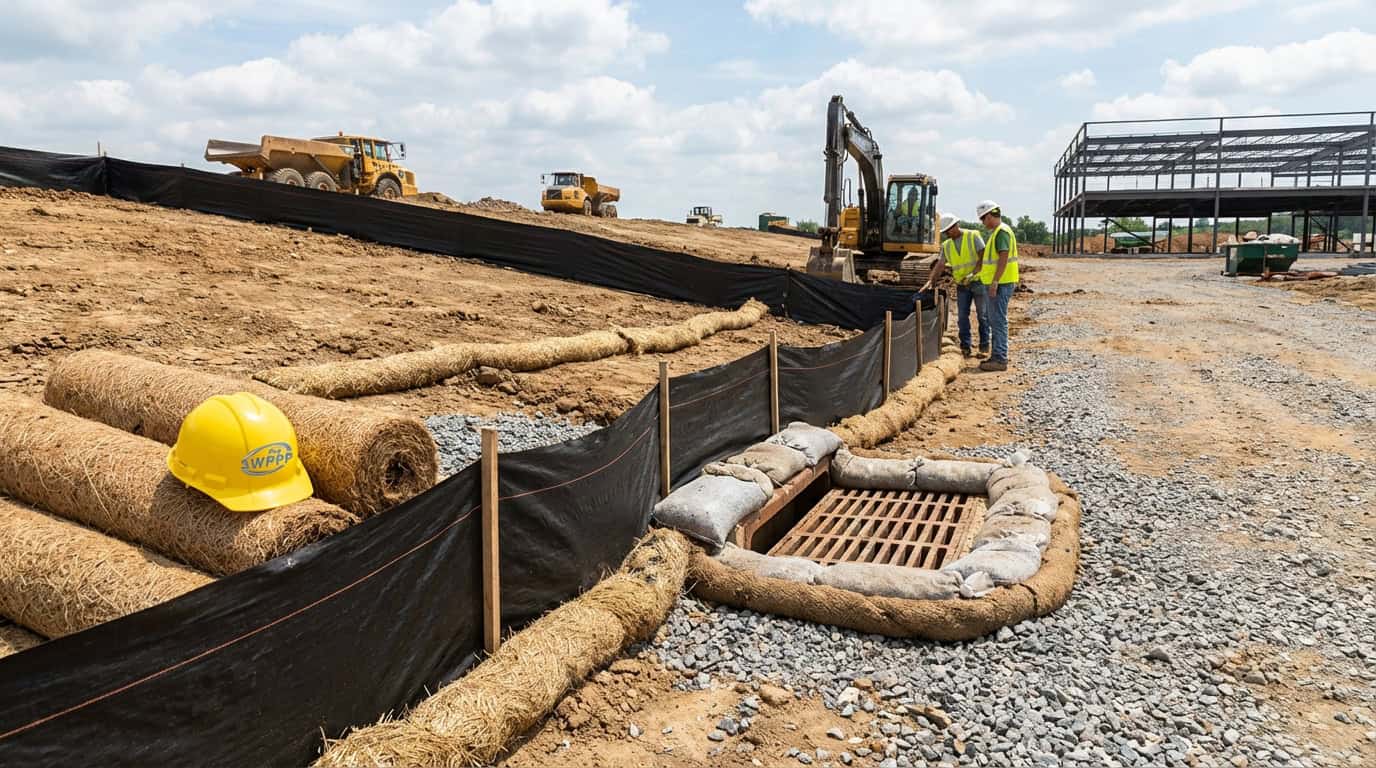
Your NOI is how you get covered under the CGP. Once approved, you’re legally allowed to have stormwater discharges, as long as you follow your SWPPP and use Best Management Practices (BMPs) like silt fences, sediment basins, and erosion control blankets.
Skip the NOI? You’re looking at penalties up to $55,000 per day per violation. That’s not a typo. The EPA doesn’t play games when it comes to water pollution.
Do You Need an NOI or Just a SWPPP?
Great question. The answer depends on your state and project size. Some states run their own NPDES programs. Others let the EPA handle it. Let’s break it down state by state so you know exactly what you need.
EPA-Run States
If you’re in Massachusetts, New Hampshire, New Mexico, Idaho, or a few other states, the EPA directly manages your permit. You file your NOI with the EPA’s online eNOI system. You also prepare a SWPPP before you file. Both are required for projects one acre or larger.
State-Run Programs
Most states run their own show. Texas has the Texas Commission on Environmental Quality (TCEQ). Georgia uses the Environmental Protection Division. California has its own regional boards. Each state has slightly different rules, forms, and deadlines.
In Texas, you submit a Notice of Intent to the TCEQ along with your SWPPP. TCEQ reviews it and issues you a permit number. You post that number on-site where inspectors can see it. No permit number, no legal work.
Georgia requires an NOI filed with the EPD, plus a SWPPP prepared by someone trained in erosion and sediment control. They want to see your site map, your BMPs, and your inspection schedule all spelled out before you move dirt.
Don’t want to mess with all the paperwork and requirements? Check out Order your SWPPP now with Pro SWPPP Professional CPESC Certified SWPPP Services.
What Goes Into a Notice of Intent?
Your NOI form asks for basic info about your project. You’ll list:
- Project name and location
- Owner and operator contact details
- Total acres disturbed
- Type of construction (residential, commercial, industrial)
- Receiving waters (where stormwater flows)
- Expected start and end dates
You’ll also check boxes about endangered species, historic properties, and water quality. If your site is near a listed species habitat or an impaired stream, you may need extra approvals before your NOI is complete.
Some states charge a fee with your NOI. Texas charges a few hundred dollars depending on project size. Georgia has similar fees. The EPA’s federal NOI is free, but you still pay for SWPPP prep and inspections.
How an NOI and SWPPP Work Together
Think of the NOI as your application and the SWPPP as your instruction manual. The NOI says, “I want permission.” The SWPPP says, “Here’s how I’ll do it right.”
Your SWPPP must include:
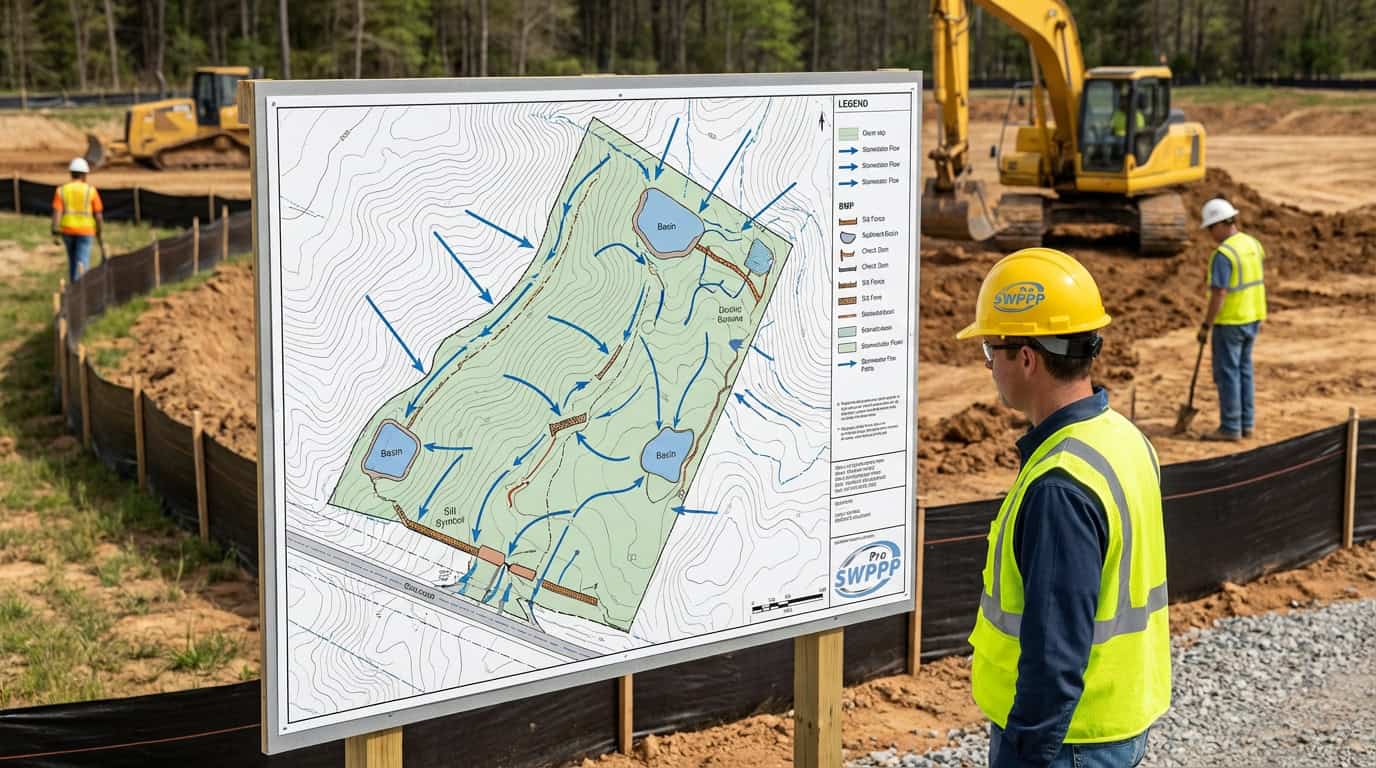
- Site description and drainage map
- Erosion Control measures (mulch, blankets, vegetation)
- Sediment Control measures (silt fences, basins, inlet protection)
- Best Management Practices (BMPs) for materials, waste, and vehicle tracking
- Inspection and maintenance schedule
- Spill response plan
You keep your SWPPP on-site. Inspectors want to see it. Your crew needs to follow it. If an inspector shows up and you don’t have a current SWPPP, you’re in violation even if your NOI is filed.
Pro SWPPP – America’s #1 SWPPP Service handles both the NOI filing and the SWPPP document prep. We know every state’s forms, deadlines, and quirks. You get a complete, compliant package ready to go.
State-by-State Quick Reference for 2026
Here’s what you need to know for the biggest construction markets:
Texas: File NOI with TCEQ. SWPPP required before filing. Permit number issued after review. Inspections every seven calendar days and after storms. Learn more at Texas SWPPP Services.
Georgia: File NOI with EPD. SWPPP must be signed by a trained professional. Land disturbance permit from local government also required. Inspections weekly and post-storm.
California: File with State Water Resources Control Board. SWPPP required. Risk-based permitting (low, medium, high). QSD (Qualified SWPPP Developer) and QSP (Qualified SWPPP Practitioner) required for medium and high risk sites.
Florida: File NOI with Department of Environmental Protection. SWPPP on-site. Notice of Termination (NOT) required when project reaches final stabilization.
North Carolina: File with Department of Environmental Quality. SWPPP by certified professional. Annual permit fee.
Not sure what your project needs? Take our SWPPP Quiz (link) or Schedule a Free SWPPP Consultation with CPESC Certified SWPPP Expert Derek E. Chinners.
Common Mistakes That Cost You Money
Filing late is the number one error. You must submit your NOI at least two days before you disturb soil in most states. Start grading early? You’re in violation from day one.
Another mistake: copying a template SWPPP without customizing it for your site. Inspectors can tell when you’ve used a generic plan. They want site-specific maps, local BMPs, and real drainage calculations.
Forgetting to post your permit number on-site is another easy violation. Inspectors drive by and check. No visible permit? Instant citation.
Not conducting inspections is a huge problem. Your permit requires weekly inspections and inspections within 24 hours after a storm that produces 0.5 inches or more of rain. Miss those inspections, and you’re non-compliant even if your erosion controls are perfect.
Notice of Termination: Closing the Loop
Once your project is finished and your site is stabilized, you file a Notice of Termination (NOT). This tells the agency you’re done and no longer discharging stormwater. Final stabilization usually means 70% uniform perennial vegetation cover or equivalent permanent surface (asphalt, concrete, landscaping).
You can’t file the NOT until your site is truly stable. If you terminate early and erosion starts again, you’re back to square one with penalties. Some states require as-built drawings of permanent stormwater structures like detention ponds before they accept your NOT.
Pro SWPPP – America’s #1 SWPPP Service helps you through the entire lifecycle: NOI filing, SWPPP prep, inspection support, and NOT submission. We make sure you stay compliant from first dirt to final grass seed.
Why Pro SWPPP Is Your Best Move
You could spend weeks learning state rules, filling out forms, and hoping you got it right. Or you could hand it to experts who do this every day. Pro SWPPP – America’s #1 SWPPP Service has filed thousands of NOIs and written SWPPPs for projects from small parking lots to massive subdivisions.
Our CPESC-certified professionals know the Construction General Permit inside and out. We know TCEQ’s quirks, Georgia EPD’s inspection requirements, and California’s risk tiers. We speak the language of erosion control, sediment basins, and Best Management Practices.
When you work with us, you get:
- A complete, customized SWPPP for your site
- NOI filed correctly and on time
- Inspection forms and training for your crew
- Ongoing support if an inspector shows up with questions
- NOT filing when you’re ready to close out
We’ve seen contractors lose sleep over stormwater compliance. We’ve seen projects shut down because paperwork wasn’t right. We’ve also seen our clients breeze through inspections because every detail was handled.
Want to know more about how we work? Visit our About page or reach out through our Contact Us page.
External Resources to Bookmark
The EPA’s Construction General Permit page is a goldmine of information. You can find sample forms, fact sheets, and guidance documents at EPA Stormwater Discharges from Construction Activities. Bookmark it. You’ll come back to it.
Your state environmental agency website has the specific forms and fees for your location. Don’t rely on old PDFs you found online. Rules change. Use the current year’s forms.
FAQ
Do I need an NOI for a project under one acre?
Usually no, unless your project is part of a larger common plan of development that totals one acre or more. If your half-acre lot is part of a 20-lot subdivision, you need the NOI. Check with your state agency if you’re unsure.
How long does it take to get NOI approval?
It varies by state. EPA-run states often issue automatic coverage two days after you file electronically. State-run programs like Texas and Georgia may take a week or more to review and issue a permit number. Plan ahead.
Can I start work before my NOI is approved?
No. You must have permit coverage in place before you disturb soil. Starting early is a violation and can result in stop-work orders and fines.
What happens if I never file an NOI?
You’re operating illegally under the Clean Water Act. If caught, you face civil penalties, project shutdowns, and mandatory corrective actions. The EPA and state agencies actively enforce stormwater rules.
Do I need a professional to prepare my SWPPP?
Some states require a certified professional (like a CPESC or trained erosion control specialist) to sign off on your SWPPP. Even if your state doesn’t require it, hiring a pro ensures your plan is complete and compliant. Mistakes cost more than expert help.
How often do I need to update my SWPPP?
You update your SWPPP whenever site conditions change, BMPs fail, or inspections reveal problems. It’s a living document, not a file-and-forget form.
What’s the difference between an NOI and a Notice of Termination?
An NOI starts your permit coverage. A Notice of Termination (NOT) ends it. You file the NOT when your site achieves final stabilization and you’re no longer discharging stormwater.
Can I transfer my NOI if I sell the property mid-project?
Yes, but you need to file a Notice of Change and the new owner must accept permit responsibility. The process varies by state. Don’t leave the buyer hanging without coverage.
Stop stressing about stormwater compliance and let Pro SWPPP – America’s #1 SWPPP Service handle your Notice of Intent and SWPPP so you can focus on building.
Leave a Reply