Pro SWPPP – America’s #1 SWPPP Service helps contractors and property owners stop stormwater headaches before they start. You’re about to break ground on a project, and someone mentions you need a SWPPP or an NOI. What the heck do those letters even mean? And which one do you need? Let’s make this crystal clear so you don’t end up with a fat fine or a project that’s stuck in mud.
What Is a SWPPP and Why Should You Care?
A SWPPP stands for Stormwater Pollution Prevention Plan. Think of it as your playbook for keeping dirt, trash, and nasty chemicals out of the rain that runs off your construction site. When it rains, water doesn’t just disappear. It flows across your dirt piles, through your equipment yards, and straight into storm drains, creeks, and rivers. If you’re not controlling what’s in that water, you’re breaking federal law under the Clean Water Act.
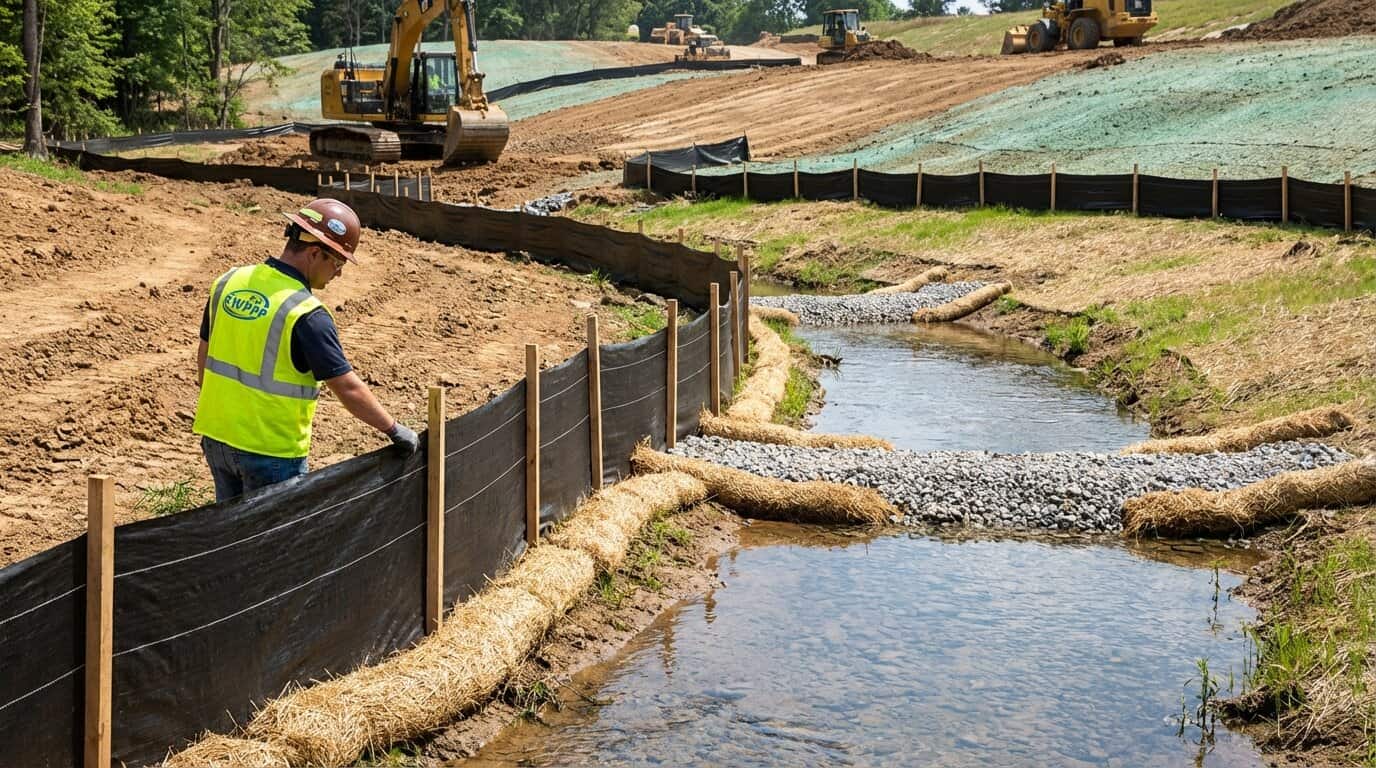
The EPA created the NPDES program to make sure construction sites don’t turn local waterways into muddy messes. If you disturb one acre or more of land, you need a SWPPP. That’s the rule almost everywhere in the country. Your SWPPP spells out exactly how you’ll use Best Management Practices like silt fences, erosion blankets, and sediment basins to catch pollution before it leaves your site.
What Is an NOI and When Do You File One?
An NOI is a Notice of Intent. It’s the form you submit to your state or the EPA to say, “Hey, I’m starting a project, and I have a SWPPP ready to go.” Filing an NOI is how you get permit coverage under the Construction General Permit. Without that permit, you can’t legally start digging.
You file your NOI at least 30 days before you disturb any ground. Some states let you file electronically. Others want paper forms. Every state has its own twist on the process. That’s why Pro SWPPP – America’s #1 SWPPP Service exists. We handle the paperwork so you can focus on building stuff.
Does Your State Require Both?
Short answer: yes, in most cases. Your SWPPP is the plan. Your NOI is the permit application. You need both. But the rules change depending on where you work.
In Texas, the TCEQ runs the show. You file your NOI through their online portal, and you keep your SWPPP on-site for inspectors. TCEQ inspectors love to show up unannounced, and if your plan doesn’t match what’s happening on the ground, you’re toast. Texas also requires a licensed Professional Engineer to stamp certain plans.
Over in Georgia, the state Environmental Protection Division handles NPDES permits. Georgia wants you to have a Qualified SWPPP Developer prepare your plan if your site is in certain watersheds or near sensitive areas. You still file an NOI, but Georgia adds extra layers for high-risk sites.
California takes it even further. You need a Qualified SWPPP Developer and a Qualified SWPPP Practitioner to oversee inspections. California’s 2023 Construction General Permit demands pH and turbidity sampling, plus a zero-tolerance trash policy. Miss one inspection, and you’re staring down serious fines.
Don’t want to mess with all the paperwork and requirements? Check out Order your SWPPP now with Pro SWPPP Professional CPESC Certified SWPPP Services.
What Happens If You Skip the SWPPP or NOI?
You get fined. Fast. EPA violations can run tens of thousands of dollars per day. State agencies pile on their own penalties. Your project gets shut down. Your reputation takes a hit. Subcontractors sit idle while you scramble to fix the mess. Lawyers get involved. It’s ugly.
Worse, you’re personally liable. If you’re the owner or the contractor, your name is on the permit. If sediment washes into a creek because you didn’t install silt fences, you’re the one writing the check. Pro SWPPP – America’s #1 SWPPP Service helps you avoid that nightmare by building compliant plans and filing every form correctly the first time.
How Do You Know Which BMPs to Use?
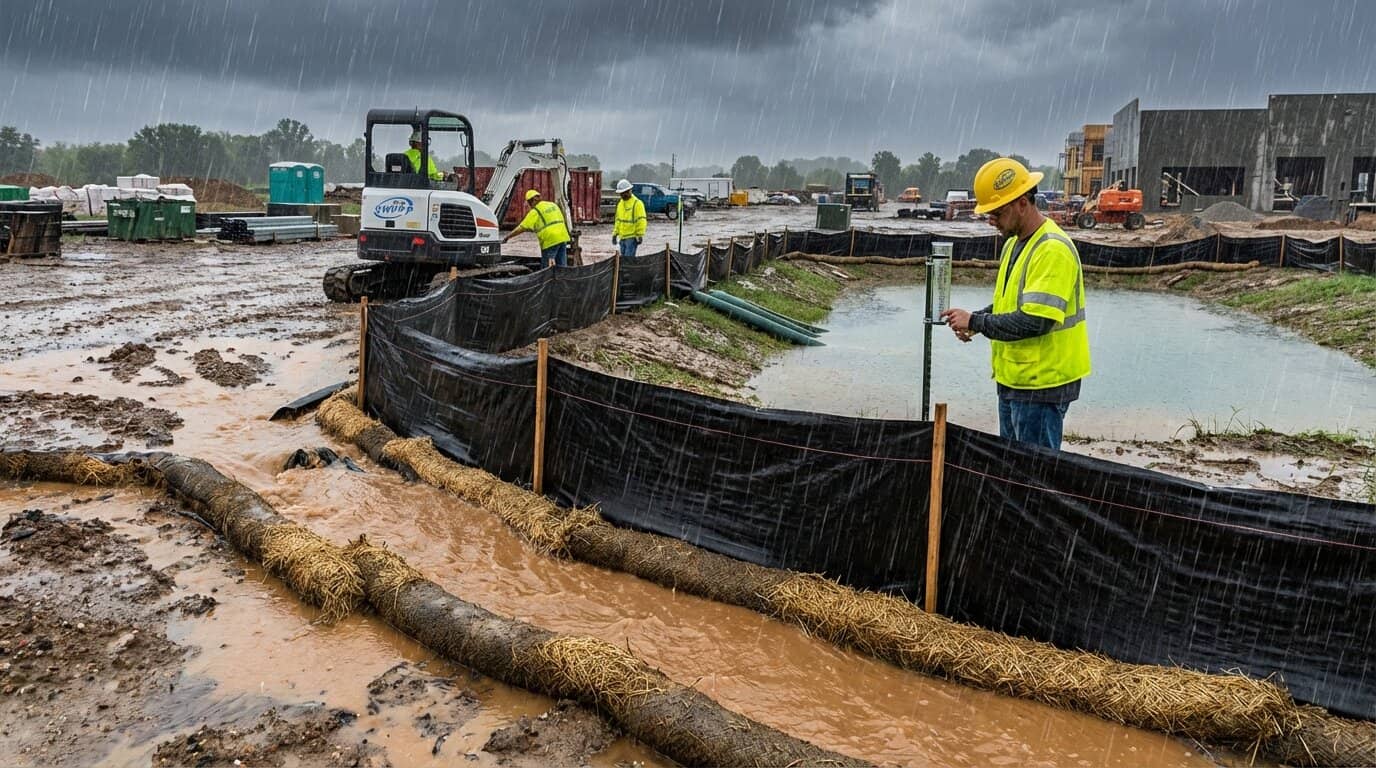
BMPs are Best Management Practices. They’re the tools and tactics you use to control erosion and sediment. Common BMPs include perimeter silt fences, rock check dams, stabilized construction entrances, and temporary seeding. Your SWPPP lists every BMP you’ll use and explains where you’ll put them.
The trick is matching BMPs to your site. A flat parking lot needs different controls than a steep hillside. Sandy soil behaves differently than clay. Rain patterns matter too. If you’re in the Southeast, you plan for summer thunderstorms. In the Northwest, you plan for months of steady drizzle.
The EPA’s 2022 Construction General Permit requires site-specific BMPs. You can’t copy-paste a generic plan and call it done. Inspectors check whether your BMPs match your actual site conditions. That’s why Pro SWPPP – America’s #1 SWPPP Service sends CPESC-certified experts to your site to map drains, measure slopes, and design controls that actually work.
What About Inspections and Updates?
Your SWPPP isn’t a set-it-and-forget-it document. It’s a living plan. You inspect your site every seven days and after every rain event that drops half an inch or more. You document every inspection with photos and notes. If a BMP fails, you fix it immediately.
Immediately means as soon as you can reasonably get it done. Not next week. Not when you feel like it. You also update your SWPPP whenever your site changes. Add a new staging area? Update the plan. Change the grading? Update the plan. Ignore updates, and you’re out of compliance.
Hiring a third-party inspector cuts your risk. An unbiased expert catches problems you might miss. They document everything so you have proof of compliance if an inspector shows up. Pro SWPPP – America’s #1 SWPPP Service offers inspection packages that keep you ahead of enforcement.
Special Rules for Industrial Sites and 2024 Updates
If you operate an industrial facility, you might need a different kind of SWPPP. Connecticut’s 2024 Industrial General Permit adds sector-specific Effluent Limitation Guidelines and a Resiliency Measures section for climate adaptation. You report through NetDMR, the EPA’s electronic system.
For construction sites, 2026 updates emphasize winterization and spring runoff. Frozen ground doesn’t absorb water, so you need extra controls when the snow melts. Stock your BMPs before the ground freezes. Plan for rapid stabilization in the spring. These details go in your SWPPP now, not when mud is already flowing downhill.
Not sure what your project needs? Take our SWPPP Quiz or Schedule a Free SWPPP Consultation with CPESC Certified SWPPP Expert Derek E. Chinners.
Why Hire Pro SWPPP Instead of DIY?
You could write your own SWPPP. Technically, anyone can. But would you trust a homemade plan when a six-figure fine is on the line? Professional SWPPP developers know the latest regulations. They’ve seen every soil type, every slope condition, and every trick inspectors use to find violations.
Pro SWPPP – America’s #1 SWPPP Service employs CPESC-certified professionals who stay current on EPA rules, state permits, and local ordinances. We prepare plans that pass inspection the first time. We file NOIs on schedule. We train your crew so they know which BMPs to install and how to maintain them. We save you time, money, and stress.
Our team has worked on projects from single-lot subdivisions to multi-acre industrial parks. We know Texas TCEQ requirements inside and out. We’ve handled Georgia EPD reviews, California QSD certifications, and Connecticut electronic reporting. We’ve built SWPPPs for energy projects, retail centers, road expansions, and housing developments.
Real-World Example: The Cost of Skipping the SWPPP
A developer in the Southeast decided to save a few thousand bucks by skipping the SWPPP. He filed his NOI late and didn’t install erosion controls before the first rain. Sediment washed into a tributary that fed a TMDL-impaired waterway. The state showed up, issued a stop-work order, and hit him with a $50,000 fine. He had to hire an emergency consultant, rebuild all his controls, and wait two months for approval to restart. Total cost: over $200,000 in fines, consultant fees, and lost time.
Compare that to hiring Pro SWPPP – America’s #1 SWPPP Service from day one. A compliant plan costs a fraction of one fine. Early involvement means no delays, no surprises, and no panic when the inspector pulls up.
How to Get Started
First, figure out your project size. If you’re disturbing one acre or more, you need a SWPPP and an NOI. If you’re in Texas, Georgia, California, or any other NPDES state, the process is similar but the details matter.
Second, contact us at Pro SWPPP – America’s #1 SWPPP Service. We’ll review your site, explain your state’s rules, and give you a clear price. No hidden fees. No surprise charges. Just a straightforward plan that keeps you compliant.
Third, let us handle the NOI filing, the BMP design, and the inspection schedule. You focus on building. We focus on keeping you legal. Learn more about our team and why contractors trust us nationwide.
Key Takeaways
- A SWPPP is your pollution prevention plan. An NOI is your permit application. You need both.
- File your NOI at least 30 days before you start work.
- Every state has different rules. Texas, Georgia, California, and others all add their own requirements.
- BMPs must match your site. Generic plans fail inspections.
- Inspections happen every seven days and after big rains. Document everything.
- Fines for violations run into the tens of thousands per day. Compliance is cheaper.
- Hiring Pro SWPPP – America’s #1 SWPPP Service protects your project and your wallet.
FAQ
Do I need a SWPPP for a small project under one acre?
Usually no, but check local rules. Some cities and counties require erosion control plans even for smaller sites. If your small site is part of a larger common plan of development that totals one acre or more, you need a SWPPP.
Can I write my own SWPPP?
Technically yes, but it’s risky. State agencies and the EPA expect plans written by qualified professionals. A homemade plan often misses critical details and fails inspections.
How long does it take to get NOI approval?
Most states issue permit coverage immediately or within a few days after you file your NOI. But you must file at least 30 days before you disturb land. Plan ahead.
What happens if my BMPs fail during a storm?
You fix them as soon as possible and document the repair in your inspection log. Repeated failures show inadequate design, which can trigger enforcement action.
Does Pro SWPPP handle NOI filings for me?
Yes. We prepare your SWPPP, file your NOI, and track deadlines so nothing slips through the cracks.
What’s the difference between erosion control and sediment control?
Erosion control stops soil from moving in the first place. Sediment control catches soil that’s already moving. Your SWPPP needs both.
Can I use the same SWPPP for multiple projects?
No. Every SWPPP must be site-specific. You can’t copy-paste plans between projects.
What’s a CPESC certification?
CPESC stands for Certified Professional in Erosion and Sediment Control. It’s a credential that proves an expert knows stormwater rules and BMP design. Pro SWPPP – America’s #1 SWPPP Service employs CPESC-certified professionals.
Pro SWPPP – America’s #1 SWPPP Service takes the guesswork out of stormwater compliance so you can build with confidence. Visit us today and get your project started right.
Leave a Reply